

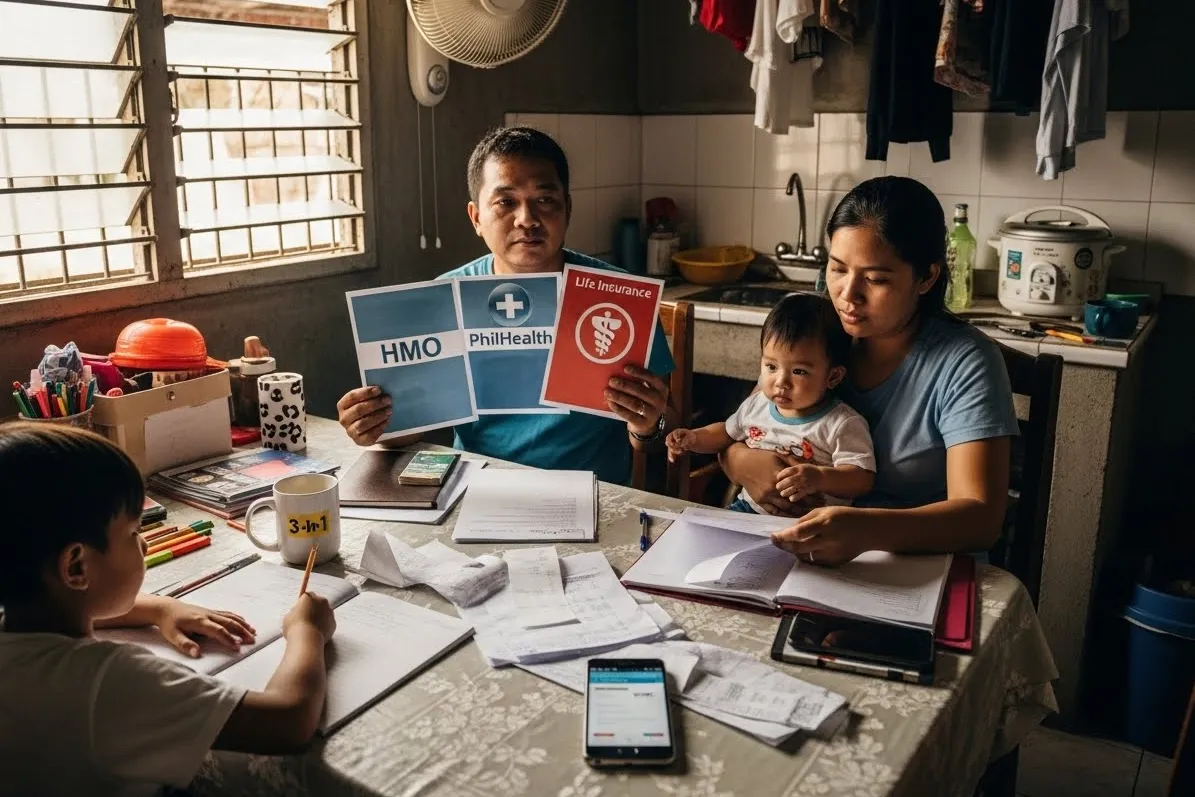

In the Philippines, most families only start thinking about health coverage when something unexpected happens — a sudden fever that turns serious, an accident, a hospital bill that wipes out months of savings. And when that moment comes, the same question always follows: “Sino ba ang sasalo ng gastos?”
- 🌿 What PhilHealth Covers (And What It Doesn’t)
- 🌿 What HMOs Cover (And Who Needs Them Most)
- 🌿 What Life Insurance Covers (And Why It’s Different)
- 📊 Comparison Table: PhilHealth vs HMO vs Life Insurance
- 🌿 Do Filipinos Need All Three? (Short Answer: Yes — Here’s Why)
- 🌿 How Much You Should Budget for PhilHealth + HMO + Life Insurance
- 🌿 Which One Should You Get First? (Beginner Priority Guide)
- 🙋 Frequently Asked Questions (FAQs)
- 🌅 The Right Protection Gives You Freedom, Not Fear
- 📚 References
That’s why people search for the difference between HMO vs PhilHealth vs Life Insurance. Each one protects you, but in very different ways. One helps with hospital bills, another covers major medical expenses nationwide, and the other protects your family financially if the worst ever happens. The problem is, many Filipinos mix them up — thinking they’re the same, or that having just one is enough.
This guide clears everything up in simple, practical terms so you can understand what each one does, what it doesn’t do, and how to choose the right combination for your family’s health and financial safety.
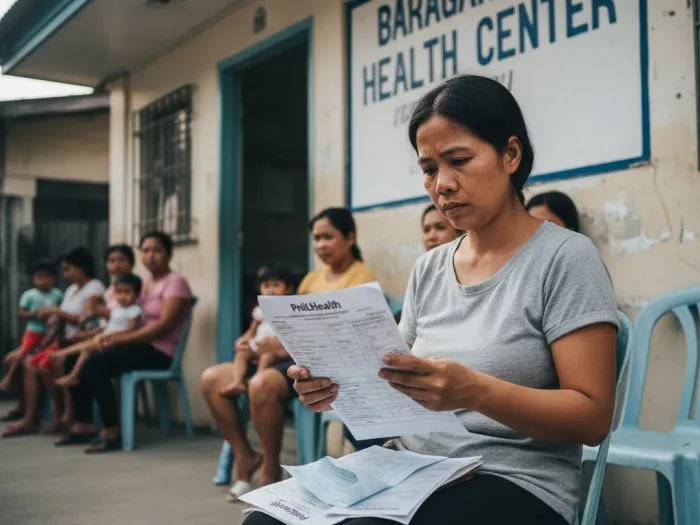
🌿 What PhilHealth Covers (And What It Doesn’t)
PhilHealth is the government’s national health insurance program. It’s designed to make hospital care more affordable for every Filipino, but it doesn’t cover everything. Knowing what PhilHealth actually pays for helps you set the right expectations and avoid sudden out-of-pocket expenses.
What PhilHealth Covers
PhilHealth provides partial financial assistance for:
- Inpatient hospitalization (room, board, basic procedures)
- Selected surgeries and treatments
- Maternity care (normal delivery, C-section with limits)
- Hemodialysis sessions
- Selected outpatient procedures
- Z Benefits for severe conditions like cancer or kidney transplants
- Konsulta Package for primary care, lab tests, and checkups
Coverage depends on benefit packages, case rates, and hospital type (public or private). You will still pay part of the bill, but PhilHealth eases the cost significantly.
Limits You Should Know
PhilHealth is not full coverage. It has fixed case rates, meaning:
- It pays a fixed amount per illness or procedure
- If the hospital bill exceeds the case rate, you pay the difference
- Coverage varies depending on the hospital’s category
This is why relying on PhilHealth alone often leaves gaps.
What PhilHealth Doesn’t Cover
There are common misconceptions about PhilHealth. It does not provide:
- Unlimited hospital coverage
- Full payment for private room rates
- Coverage for many outpatient tests
- Comprehensive dental care
- Payment for emergency room visits without admission
- Income replacement or cash benefits for your family
PhilHealth helps, but it’s not designed to shoulder everything — especially in private hospitals.
Why PhilHealth Still Matters
Even with its limits, PhilHealth is essential because it reduces your base hospital costs. Think of it as your foundation. Once PhilHealth applies its portion, any remaining amount is what your HMO or personal savings will need to cover.
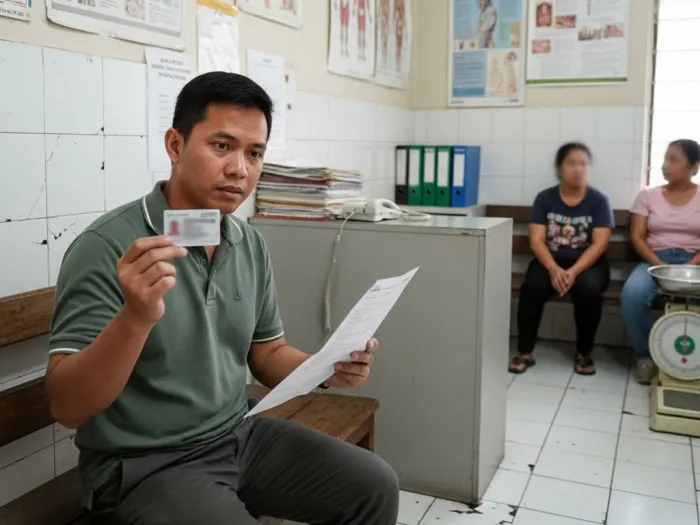
🌿 What HMOs Cover (And Who Needs Them Most)
HMOs (Health Maintenance Organizations) give you immediate, practical, and day-to-day medical coverage. If PhilHealth is your foundation, HMO is your frontline protection — the one you actually use for checkups, labs, and sudden emergencies. Most Filipinos feel the difference the moment they have an HMO card: hospital visits suddenly become less scary.
What HMOs Usually Cover
Coverage varies by provider, but most HMOs include:
- Emergency room access
- Outpatient consultations with accredited doctors
- Annual physical exams (CBC, urinalysis, X-ray, etc.)
- Lab tests and diagnostics
- Specialist consultations (cardio, ENT, OB-GYN, etc.)
- Hospitalization benefits up to your plan limit
- Preventive care and vaccinations
- Minor surgeries done in clinics
- Members-only rates at partner hospitals
This is the type of coverage you’ll use most often — especially if you have kids, chronic conditions, or work in a stressful environment.
What HMOs Don’t Cover
Important to know before signing up: HMOs do not usually cover:
- Pre-existing conditions (first 1–2 years)
- Long-term illnesses requiring huge funding
- Organ transplants
- Chemotherapy or dialysis (unless upgraded plans)
- Dental beyond cleaning (unless you add a rider)
- Reimbursement for non-accredited doctors
- Income replacement if you can’t work
This is why an HMO is great, but it can’t stand alone for serious, long-term medical battles.
Who Needs an HMO the Most
Everyone benefits from one, but it’s especially important if you:
- Have kids who easily get sick
- Don’t have savings for sudden emergencies
- Rely heavily on private hospitals
- Are a freelancer or self-employed (no company-sponsored HMO)
- Have a family history of lifestyle diseases
- Work long hours or stressful jobs
If you’ve ever hesitated to see a doctor because of the cost, an HMO fills that gap.
Why HMOs and PhilHealth Work Better Together
PhilHealth handles part of the bill.
Your HMO covers another part.
You pay less — sometimes nothing.
They’re meant to complement each other, not replace one another.

🌿 What Life Insurance Covers (And Why It’s Different)
Unlike PhilHealth and HMO, life insurance isn’t about hospital bills. It’s about protecting your family financially when you’re no longer around or when a major illness stops you from earning. Think of it as long-term security rather than day-to-day medical help.
Related Posts

What Life Insurance Covers
Depending on the plan, life insurance can provide:
- Cash benefit to your family if you pass away
- Income replacement so your family can keep paying bills
- Educational support for your children
- Loan protection so debts don’t transfer to your loved ones
- Critical illness benefits (if you add riders)
- Accidental death and disability coverage
- Cash value (for whole life or VUL plans)
This money is given directly to your beneficiaries — not the hospital — and they can use it for anything: living expenses, tuition, debts, or emergencies.
What Life Insurance Does NOT Cover
Life insurance is not designed to:
- Pay for everyday checkups
- Handle outpatient emergencies
- Cover labs, diagnostics, or minor illnesses
- Pay your hospital bills directly
- Function as a discount card for health services
That’s the job of PhilHealth and HMO.
Why Life Insurance Matters
Life insurance steps in during the worst-case scenario — when you’re gone or unable to provide. It protects your family’s financial stability so they don’t fall into debt or struggle to survive. For breadwinners, single parents, and OFWs, life insurance is one of the strongest layers of protection you can give.
Why It’s Different From HMO and PhilHealth
- PhilHealth reduces hospital bills
- HMOs pay for checkups and immediate care
- Life insurance protects income and long-term family security
They cover three completely different needs, which is why having all three gives the strongest protection.
📊 Comparison Table: PhilHealth vs HMO vs Life Insurance
Here’s a simple side-by-side comparison to help you instantly see what each one is for, what it covers, and why most Filipino families actually need all three.
| Feature | PhilHealth | HMO | Life Insurance |
|---|---|---|---|
| Main Purpose | Reduce hospital bills (government support) | Day-to-day health care + hospital coverage | Financial protection for family |
| Who It Pays | Hospital | Hospital/Clinic | Your beneficiaries |
| Covers Hospitalization? | Partial only (case rate) | Yes, up to plan limits | No |
| Covers Checkups? | Limited (Konsulta Package) | Yes (accredited clinics/doctors) | No |
| Covers ER Visits? | Only if admitted | Yes, depending on plan | No |
| Covers Lab Tests? | Limited | Yes | No |
| Covers Major Illness? | Partially or via Z Benefits | Limited unless upgraded | Yes (with riders) |
| Provides Cash to Family? | No | No | Yes, lump-sum cash benefit |
| Income Replacement? | No | No | Yes |
| Covers Funeral Expenses? | No | No | Yes (via death benefit) |
| Annual Cost | ₱4,200 (standard salary-based) | ₱3,000 to ₱30,000+ | ₱2,000 to ₱80,000+ depending on plan |
| Best For | All Filipinos (required) | Families wanting full health support | Breadwinners, OFWs, parents |
This makes the roles very clear:
- PhilHealth lowers the hospital bill.
- HMO handles actual medical care and emergencies.
- Life Insurance protects your family’s future if something happens to you.

🌿 Do Filipinos Need All Three? (Short Answer: Yes — Here’s Why)
Most Filipinos try to choose between PhilHealth, HMO, and life insurance as if they replace each other. But they don’t. Each one covers a different part of your life — health, emergencies, and your family’s financial future. When you put them together, that’s when real protection happens.
PhilHealth Handles the Base Hospital Costs
It reduces the biggest chunks of your hospital bill. Even if the coverage isn’t huge, PhilHealth removes a large part of the financial shock before anything else kicks in. Without it, your bill is instantly heavier.
HMO Protects You From Sudden Medical Expenses
HMOs are the coverage you’ll use most often.
- Fever? Checkup covered.
- Chest pains? ER covered.
- Lab tests? Covered.
- Hospitalization? Covered up to your limit.
This is your everyday medical partner — the one that saves you from spending thousands out of pocket.
Life Insurance Protects Your Family When You Can’t
If you pass away or suffer a critical illness, your income stops. But your family’s expenses continue.
Life insurance gives them:
- Cash benefit
- Income replacement
- Debt protection
- Tuition support
It keeps your family financially stable even when the worst happens.
Why You Need All Three Together
When combined, they create a complete protection system:
- PhilHealth lowers the hospital bill
- HMO covers immediate health needs
- Life Insurance protects your family long-term
Relying on just one leaves big gaps.
Having all three means peace of mind — for you and everyone who depends on you.

🌿 How Much You Should Budget for PhilHealth + HMO + Life Insurance
A lot of Filipinos think full protection is expensive, but when you break down the numbers, it’s more doable than most people expect. The key is knowing what each one costs on average and choosing plans that match your income and family needs.
PhilHealth: The Most Affordable and Mandatory
PhilHealth is required for all employed Filipinos.
- Employed: around 3% of monthly salary, shared by employer
- Self-employed/Voluntary: around ₱4,000–₱5,000 per year
- OFWs: set annual contribution
This is your base protection — and it’s already built into your budget if you’re employed.
HMO: The Middle Layer of Protection
Costs vary depending on coverage, age, and provider.
Typical costs for individual/self-employed plans:
- ₱3,000 to ₱6,000 per year (basic clinic + ER plans)
- ₱10,000 to ₱25,000 per year (more complete hospitalization coverage)
- ₱30,000+ for premium plans with wider networks
If you’re employed, your company often provides a free HMO.
If not, consider getting at least a basic plan so sudden emergencies won’t drain your savings.
Life Insurance: Long-Term Financial Protection
The cost depends on age, health, and coverage:
- Term insurance: ₱2,000–₱10,000 per year (best for high coverage, low cost)
- VUL: ₱30,000–₱80,000 per year (insurance + investment)
- Whole life: ₱20,000–₱60,000 per year
Breadwinners and parents usually start with term insurance because it gives the biggest benefit for the smallest budget.
Sample Annual Budget for Full Protection
Here’s a realistic example for a typical Filipino:
| Protection Type | Estimated Annual Cost | Notes |
|---|---|---|
| PhilHealth | ₱4,500 | Required, base protection |
| HMO | ₱12,000 | Decent self-pay plan |
| Life Insurance (Term) | ₱6,000 | ₱1M–₱2M coverage |
Total: ~ ₱22,500 per year
That’s around ₱1,875 per month — roughly the cost of a few takeout meals or a small monthly subscription habit.
Adjust Based on Your Budget
- If your budget is tight: PhilHealth + Basic HMO
- If you’re a breadwinner: PhilHealth + Term Insurance
- If you want long-term wealth building: PhilHealth + HMO + VUL
- If you rely on private hospitals: prioritize a stronger HMO plan
You don’t need the most expensive plans — you just need the right mix for your life situation.
🌿 Which One Should You Get First? (Beginner Priority Guide)
If you can’t afford all three right away, that’s completely normal. Most Filipinos build their protection one layer at a time. The key is knowing which one to prioritize first based on your situation, health, and responsibilities.
1. PhilHealth – Non-Negotiable, Required First
Whether you’re employed, self-employed, or looking for work, PhilHealth should always be the first layer.
- It reduces your biggest hospital costs
- Even private hospitals apply PhilHealth deductions
- It’s mandatory and affordable
You build everything else on top of this.
2. HMO – Second Priority for Most Filipinos
If you’ve ever avoided a doctor because of fees, an HMO fixes that.
Get an HMO next if you:
- Have no emergency fund
- Rely on private hospitals
- Have kids who often get sick
- Are a freelancer or self-employed (no company HMO)
An HMO protects your cash flow from sudden medical expenses — clinic visits, ER, and labs.
3. Life Insurance – Third Priority, but Crucial for Breadwinners
This becomes the top priority if people depend on your income.
Get life insurance early if you:
- Have children
- Support parents or siblings
- Are the main income earner
- Have loans or a mortgage
Even a small term plan can protect your family from falling into debt.
Priority Guide Based on Life Situation
Here’s a quick reference:
| Your Situation | First Priority | Second | Third |
|---|---|---|---|
| Employed with Company HMO | PhilHealth | Life Insurance | Optional additional HMO |
| Freelancer / Self-employed | PhilHealth | HMO | Life Insurance |
| Breadwinner with kids | PhilHealth | Life Insurance | HMO |
| Single, no dependents | PhilHealth | HMO | Optional insurance |
| OFW | PhilHealth | Life Insurance | HMO (local or abroad) |
| Low-income families | PhilHealth | Basic HMO | Microinsurance |
Start where you are. Add layers as your income grows. Protection builds over time, just like savings.
🙋 Frequently Asked Questions (FAQs)
• Is PhilHealth enough to cover hospital bills?
No. PhilHealth only reduces your bill through fixed case rates. It rarely covers the full amount, especially in private hospitals. You still need an HMO or personal savings for the remaining balance.
• Do I still need an HMO if I already have PhilHealth?
Yes. PhilHealth handles only part of hospitalization, while HMOs cover ER visits, outpatient checkups, labs, and doctor consultations. They work best when used together.
• What does life insurance cover that HMOs don’t?
Life insurance protects your family financially if you die or become critically ill. HMOs and PhilHealth only handle hospital and medical bills — not income replacement or long-term family support.
• Which one should I get first if my budget is tight?
Start with PhilHealth since it’s mandatory and affordable. Then get an HMO to handle sudden medical expenses. Add life insurance once you can afford consistent premiums.
• Is HMO better than life insurance?
They do different things. HMO is for your health needs today; life insurance is for your family’s financial security if something happens to you. One is not a replacement for the other.
• Do HMOs cover pre-existing conditions?
Most HMOs have a 1–2 year waiting period before covering pre-existing conditions. Cheaper plans usually exclude them entirely. Always check the plan details before enrolling.
• Can OFWs get HMO or life insurance?
OFWs can get life insurance easily from Philippine providers. HMOs are trickier because coverage may only apply within the Philippines, but some providers offer international options or emergency coverage during visits home.
• Do I need life insurance if I’m single with no kids?
It’s optional. If no one depends on your income, your priority should be an HMO + PhilHealth. You can consider a small life insurance plan for future family planning or loan protection.
• Does HMO cover emergency room visits?
Yes, most HMO plans cover ER visits as long as the hospital is accredited. There may be limits depending on your plan type.
• Can I have PhilHealth, HMO, and life insurance at the same time?
Yes — and that’s the ideal setup. Each one protects you from different risks, and together they create complete financial and health protection for your family.
🌅 The Right Protection Gives You Freedom, Not Fear
Life in the Philippines can feel uncertain sometimes — rising medical costs, unexpected emergencies, family responsibilities that never seem to end. But having the right protection in place changes the way you move through life. Suddenly, checkups don’t feel like financial threats. Hospital bills don’t crush your plans. And your family has stability even during the hardest moments.
PhilHealth takes care of the basics.
HMO shields you from everyday health costs.
Life insurance protects the people you love when they need it most.
You don’t need the most expensive plans. You just need the right mix, built slowly and wisely, according to your budget and your life. Each layer you add removes a little more fear and replaces it with confidence — the kind that lets you focus on living, not worrying.
If you’ve made it this far, it means you care about your future and your family’s safety. And that alone already puts you ahead.