

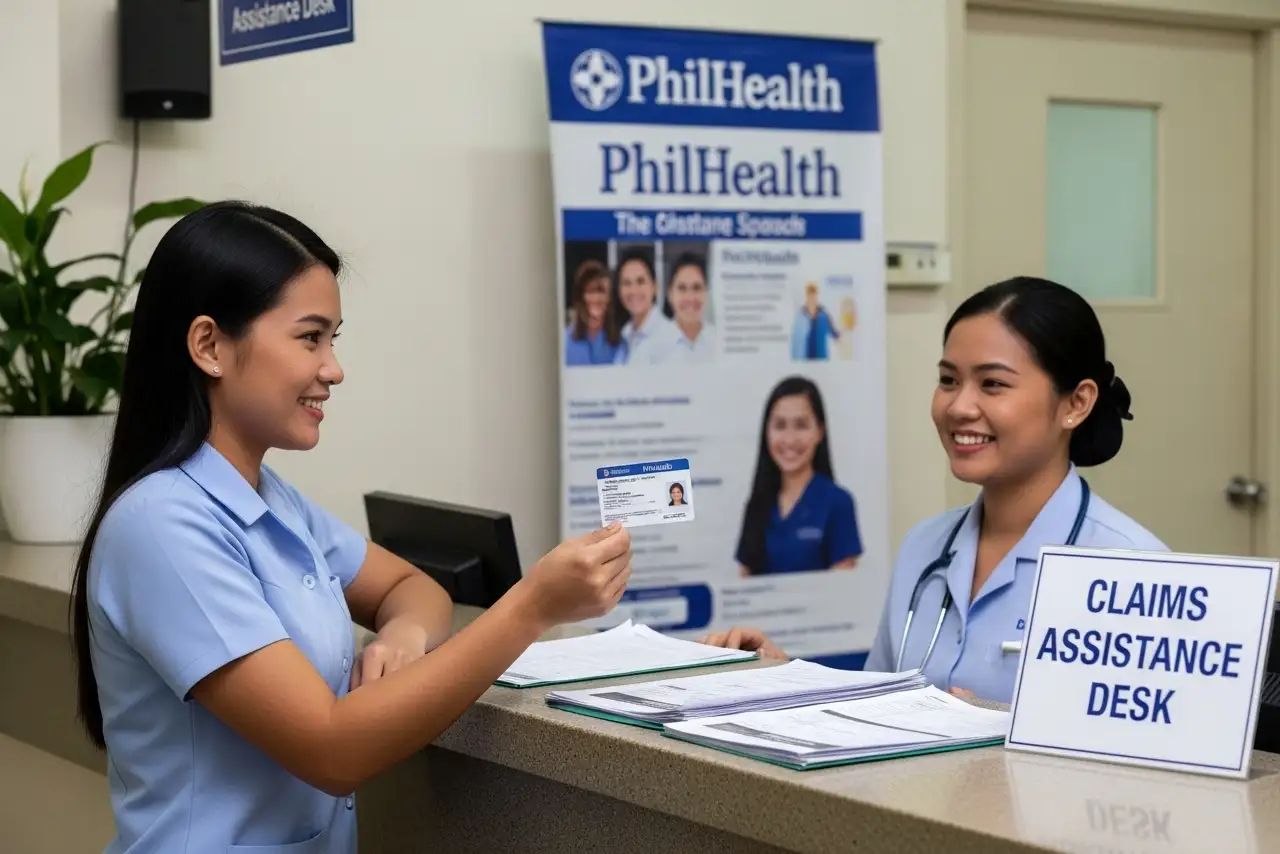

Let’s be honest – most of us only remember PhilHealth when we’re already in the hospital, scrambling to fill out forms and asking, “Magkano nga ulit ang makukuha ko?” 😅 But if you really know how it works, this small green card can actually save you thousands – even tens of thousands – in medical bills.
- 🏥 Understanding Your PhilHealth Coverage
- 💳 How to Register, Update, and Check Your PhilHealth Online (Step-by-Step 2025 Guide)
- 📄 How to Claim PhilHealth Benefits and Reimbursements (Hospital & Outpatient Guide)
- 🧾 PhilHealth vs HMO: What’s the Difference and Which One Do You Need?
- 💡 Practical Tips to Maximize Your PhilHealth Benefits (Real-Life Diskarte Moves)
- ❓ Frequently Asked Questions About PhilHealth (Updated 2025)
- 💚 Why Knowing Your PhilHealth Is an Act of Self-Care
The truth is, PhilHealth benefits go way beyond just inpatient discounts. From free check-ups, laboratory tests, dialysis sessions, maternity packages, to coverage for serious illnesses – it’s your government-mandated health shield. The catch? You need to understand how to use it before you need it.
So in this guide, we’ll break down everything – your PhilHealth coverage for 2025, how to register or update online, who counts as dependents, and how to file claims properly (without the usual headache sa pila). It’s your PhilHealth membership guide, simplified and Pinoy-style – so you can finally get the benefits you’ve been paying for every month.
Because health is wealth, but it’s even better when the hospital bill isn’t nakaka-broke.

🏥 Understanding Your PhilHealth Coverage
Your monthly PhilHealth contributions aren’t just numbers on your payslip – they’re your ticket to affordable healthcare. But to maximize your PhilHealth benefits, you need to know exactly what’s covered (and what’s not).
1. Inpatient Benefits
This is the most commonly used type of coverage – when you’re admitted to a hospital. PhilHealth helps shoulder part of your room, board, medicines, operating room fees, and professional services.
- Coverage varies per case, from ₱4,000 for mild conditions up to ₱50,000 or more for major operations.
- Hospitals must be PhilHealth-accredited for your claim to apply.
| Benefit Type | Example Case | Average Coverage |
|---|---|---|
| Room & Board | 3-day pneumonia confinement | ₱3,000–₱5,000 |
| Surgery | Gall bladder removal | ₱30,000+ |
| ICU Care | Heart attack treatment | ₱50,000+ |
💡 Tip: Always check your PhilHealth benefit case rate before discharge. Hospitals are required to post them at billing sections.
2. Outpatient Benefits
Even if you’re not admitted, you can still use PhilHealth outpatient coverage.
This includes:
- Day surgeries (minor operations that don’t need confinement)
- Hemodialysis and peritoneal dialysis
- Radiation therapy
- TB-DOTS treatment for tuberculosis
- Animal bite treatment under the Animal Bite Package
For example, a patient on regular dialysis can receive ₱2,600 per session, covered up to 90 sessions per year.
3. Maternity and Newborn Care Benefits
Pregnant moms can claim PhilHealth maternity benefits for normal delivery (₱6,500) or C-section (₱19,000).
This covers prenatal checkups, delivery costs, and postpartum care. The newborn’s first Hearing Test, Newborn Screening, and Vaccinations are also included.
4. Z Benefits and Special Programs
PhilHealth also provides long-term coverage for catastrophic illnesses under its Z Benefit Package.
These include:
- Breast, cervical, and prostate cancer
- Kidney transplant
- Coronary artery bypass graft
- Acute leukemia
Depending on the illness, the Z Benefit coverage can reach up to ₱500,000, a massive help for families facing long-term treatment costs.
5. PhilHealth Dependents
Your PhilHealth dependents can also enjoy your benefits, including:
- Your legal spouse (not employed or a member)
- Children below 21 years old
- Parents aged 60+ who are not members themselves
- Children with permanent disabilities
Each dependent can use your coverage separately, as long as the total benefit limit per case is not exceeded.
So next time you visit the hospital, don’t just hand over your card – know what it’s worth. Understanding your PhilHealth coverage in 2025 means turning that green card into real protection for your family.
💳 How to Register, Update, and Check Your PhilHealth Online (Step-by-Step 2025 Guide)
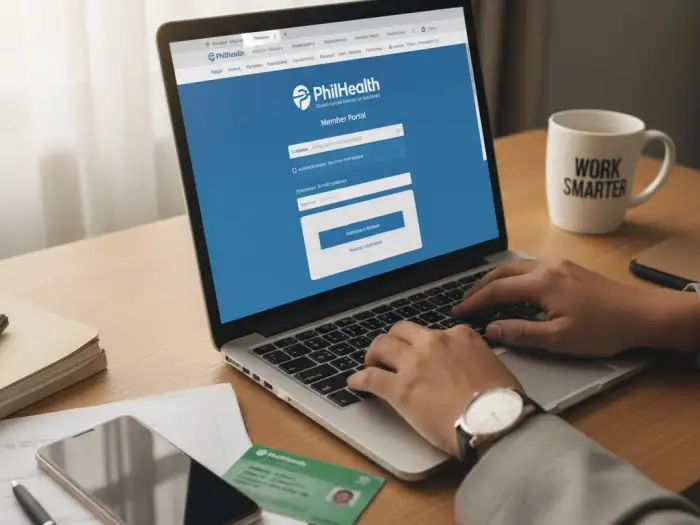
Gone are the days of spending half your day falling in line just to update your records. With the PhilHealth Member Portal, you can now register, check your contributions, and even print your MDR (Member Data Record) online – walang pila, walang init ng ulo.
🔹 Step 1: Online Registration for New Members
- Go to https://memberinquiry.philhealth.gov.ph
- Click “Create Account.”
- Fill out your personal info (name, birthdate, mobile, email).
- Attach a valid ID (e.g., UMID, driver’s license, passport).
- Wait for the confirmation email – once approved, you’ll get your PhilHealth Identification Number (PIN).
💡 Tip: Save your PIN both digitally and in a notebook. You’ll need it every time you claim benefits or update info.
🔹 Step 2: For Existing Members (Update or Check Contributions)
Already a member? You can:
- Update details – marital status, dependents, contact info, or employment.
- View your contribution summary – perfect for freelancers or those who pay voluntarily.
- Download MDR – needed when filing claims or registering dependents.
| Action | Where to Go | What You’ll Need |
|---|---|---|
| Check contributions | Member Portal | PIN + Password |
| Update dependents | Nearest branch or via employer | Valid ID + Birth Cert |
| Download MDR | Member Portal | Printable PDF |
🔹 Step 3: For OFWs and Overseas Members
For PhilHealth for OFWs, registration can be done through the PhilHealth Overseas Office or via partner remittance centers like iRemit, Ventaja, and PNB.
- Annual contribution is around ₱2,400–₱3,600, depending on income.
- Coverage includes overseas confinement and medical reimbursement for services abroad.
- You can assign a PhilHealth representative in the Philippines to file claims for you.
💡 OFW Reminder: Keep digital copies of your payment receipts and MDR. These are required when claiming reimbursement for overseas hospitalizations.
🔹 Step 4: Keeping Your Membership Active
To keep your PhilHealth benefits uninterrupted, make sure contributions are updated:
Related Posts


- Employed: Paid automatically via employer.
- Self-employed/Freelancer: Pay quarterly or annually via GCash, Maya, or Bayad Center.
- OFW: Pay yearly through remittance partners or online banking.
If you miss payments, you can still update – PhilHealth doesn’t require penalties for lapsed months, but coverage applies only after contribution resumption.
By mastering these online tools, you can finally manage your PhilHealth membership guide from anywhere – even while waiting in line for your taho. 😄
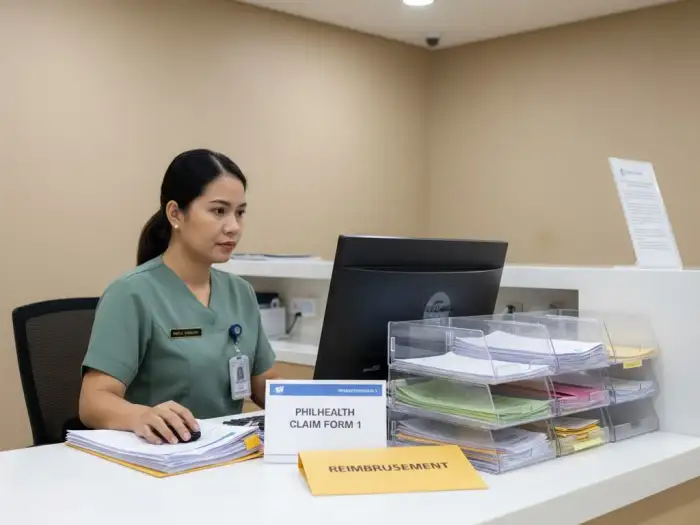
📄 How to Claim PhilHealth Benefits and Reimbursements (Hospital & Outpatient Guide)
If you’ve ever been hospitalized and wondered, “Bakit parang ang liit lang ng nakuha ko sa PhilHealth?” – you’re not alone. The truth is, many members don’t maximize their PhilHealth benefits simply because they don’t know the right process.
Good news: it’s easier than most people think.
🏥 For Hospital Confinement
When you’re admitted to a PhilHealth-accredited hospital, the process is mostly automatic – meaning, your benefit is deducted directly from your bill before discharge.
Here’s what you need to do:
- Present your PhilHealth ID and Member Data Record (MDR) upon admission.
- Fill out the PhilHealth Claim Form 1 (CF1) – the hospital usually provides this.
- Submit supporting documents (doctor’s orders, receipts, discharge summary).
- Before you go home, check your PhilHealth deduction on the billing statement.
💡 Tip: Always double-check that the hospital used the correct case rate for your illness. Each condition has a fixed coverage amount (posted on PhilHealth’s website).
| Step | Requirement | Where to Submit |
|---|---|---|
| 1 | PhilHealth ID & MDR | Hospital Admission |
| 2 | CF1 Form | Hospital Billing Section |
| 3 | Hospital Records | Attached to Claim |
| 4 | Verify Deduction | Before Discharge |
✅ No need to file a separate claim if deduction is applied.
🏠 For Outpatient or Non-Confinement Claims
If you paid out-of-pocket (e.g., small clinic or provincial hospital), you can claim PhilHealth reimbursement afterward.
Requirements:
- PhilHealth Claim Form 1 (CF1)
- Official Receipts of hospital and doctor’s fees
- Discharge summary or medical certificate
- Valid ID of patient and member
How to File:
- Gather all requirements.
- Submit to the nearest PhilHealth office within 60 days after discharge.
- Wait for claim evaluation (usually 30–60 days).
- Once approved, your PhilHealth reimbursement will be deposited to your bank account or issued via check.
💡 Pro move: Make photocopies of everything – hospitals sometimes request verification copies.
👨👩👧👦 For Dependents and OFWs
Dependents can claim PhilHealth hospital benefits as long as:
- They’re listed in your MDR, and
- The member has active contributions.
For OFWs, reimbursement can be filed locally or abroad through PhilHealth’s partner embassies and remittance centers. Always bring certified true copies of overseas hospital receipts (translated to English if needed).
⚖️ No Balance Billing Policy
For indigent, senior, and sponsored members, the No Balance Billing (NBB) policy ensures that you don’t pay anything beyond what PhilHealth covers.
- Applies in government hospitals (DOH-retained and LGU-run).
- Just show proof of membership and valid ID.
If you’re ever charged extra in an NBB hospital, report it to PhilHealth’s Action Center (02) 8441-7442 or email actioncenter@philhealth.gov.ph.
Understanding how to use PhilHealth properly means you’ll never have to ask, “Pwede pa ba ito ma-claim?” again. You worked hard for those contributions – make them work just as hard for you.
🧾 PhilHealth vs HMO: What’s the Difference and Which One Do You Need?
Let’s settle this once and for all: PhilHealth and HMOs are not the same thing. But when used together, they’re like a solid tag team against expensive hospital bills. 💪
💚 What PhilHealth Covers
PhilHealth is government-mandated health insurance, designed to help all Filipinos afford medical care. It mainly covers:
- Hospital confinement (case rate deductions)
- Outpatient services like dialysis and TB treatment
- Maternity and newborn care
- Catastrophic illnesses under the Z Benefit program
Coverage is fixed per illness (e.g., ₱4,000–₱50,000 depending on the case). It’s basic but reliable – especially for public hospitals and accredited clinics.
💼 What HMOs Cover
HMOs (Health Maintenance Organizations) are private health plans like Maxicare, Medicard, Intellicare, or PhilCare. They usually offer:
- Unlimited consultations with partner doctors
- Discounts on labs and medicines
- Emergency and dental care
- Room and board coverage up to your plan limit
HMOs are great for employees and freelancers who want faster, broader, and cashless access to hospitals – something PhilHealth alone doesn’t always guarantee.
| Feature | PhilHealth | HMO |
|---|---|---|
| Type | Government Insurance | Private Health Plan |
| Coverage | Basic, case rate-based | Comprehensive, plan-based |
| Payment | Monthly contribution | Annual or employer-provided |
| Usage | Reimbursement or bill deduction | Usually cashless |
| Works Abroad | Yes (for OFWs) | Depends on provider |
🤝 How They Work Together
When you’re hospitalized and have both, the billing goes like this:
- PhilHealth deducts first based on case rate.
- Your HMO covers the remaining balance (up to your plan’s limit).
💡 Example:
Let’s say your hospital bill is ₱60,000 for appendicitis.
- PhilHealth covers ₱24,000.
- Your HMO pays ₱36,000.
- You pay ₱0.
Perfect teamwork. 🙌
So, if you can afford both, keep them active. Think of PhilHealth as your safety net and HMO as your comfort layer. One makes sure you’re covered, the other makes sure you’re comfortable.

💡 Practical Tips to Maximize Your PhilHealth Benefits (Real-Life Diskarte Moves)
Knowing your PhilHealth benefits is one thing – maximizing them is another. Here’s how to make every peso of your contribution count (and avoid the sayang moments most Filipinos fall for).
1. Keep Your Membership Active
Missed a few payments? No worries – you can still catch up. Just remember: PhilHealth coverage only applies after you resume contributions.
- For self-employed and freelancers: pay quarterly or yearly to avoid lapses.
- For employees: always verify that your employer is remitting correctly (it should appear in your PhilHealth Member Portal).
2. Update Your Dependents Regularly
Don’t wait until someone gets sick to update your MDR (Member Data Record). Add your spouse, kids, or parents right away. Each PhilHealth dependent can use your benefits separately – imagine the savings if everyone’s covered.
| Dependent | Required Document | How to Add |
|---|---|---|
| Spouse | Marriage Certificate | PhilHealth Office or Employer HR |
| Child | Birth Certificate | Online/Branch Submission |
| Senior Parent | Birth Certificate + ID | Walk-in at PhilHealth Branch |
💡 Mini-hack: Bring digital copies of these documents on your phone. Super handy for verification anytime.
3. Check the Case Rate Before You Pay
Every illness has a fixed PhilHealth coverage rate (called the case rate).
Example:
- Dengue = ₱10,000
- Pneumonia = ₱15,000
- Appendectomy = ₱24,000
Knowing these numbers helps you double-check hospital billing and avoid being overcharged or under-deducted.
4. Combine PhilHealth + HMO + Company Benefits
If you’re employed, your PhilHealth deduction works alongside your HMO and company coverage. Let PhilHealth pay first (via automatic deduction), then your HMO covers the remaining. Less hassle, more savings.
💡 Pro Tip: Ask your HR for your company’s Health Reimbursement Flowchart – it’ll show which provider pays what.
5. Always Keep Receipts and Documents
Whether you’re claiming reimbursements or tax deductions, receipts are gold. Keep copies of hospital bills, lab results, and doctor’s notes for at least 6 months.
- Label them by date and patient.
- Store photos in Google Drive or your phone gallery.
This helps when filing PhilHealth claim forms later – or when BIR asks for proof of medical expenses.
6. Use PhilHealth for Preventive Care
Yes, PhilHealth covers some free check-ups and screenings! Look for accredited Konsulta providers – you can get free blood pressure checks, lab tests, and preventive consultations every year.
💡 Pinoy Reminder: Don’t wait for “masakit na.” Prevention is still the cheapest cure – especially when it’s libre.
By applying these small but powerful diskarte moves, you’re not just using PhilHealth – you’re owning it. Every contribution you’ve made is an investment in your peace of mind.
❓ Frequently Asked Questions About PhilHealth (Updated 2025)
1. How do I register for PhilHealth online?
Visit the official PhilHealth Member Portal and click Create Account. Fill out your details, upload a valid ID, and you’ll receive your PhilHealth Identification Number (PIN) via email after approval.
2. How can I check my PhilHealth contributions?
Log in to the Member Portal using your PIN and password. You’ll see all posted contributions, including employer remittances and voluntary payments.
3. Who can be my PhilHealth dependents?
Dependents include your legal spouse, children below 21 years old, and parents aged 60 and above who aren’t members. They can all use your PhilHealth benefits as long as you have active contributions.
4. What illnesses are covered by PhilHealth?
PhilHealth covers hundreds of conditions through fixed case rates, from common illnesses like pneumonia and dengue to major surgeries and cancer under the Z Benefit Program.
5. How do I claim PhilHealth reimbursement?
Submit your Claim Form 1, official receipts, and hospital documents to the nearest PhilHealth office within 60 days after discharge. Once approved, reimbursement is released via bank deposit or check.
6. What’s the difference between PhilHealth and HMO?
PhilHealth is government insurance offering basic coverage, while HMOs are private providers offering broader, cashless care. Together, they maximize your hospital savings.
7. How much is the PhilHealth contribution for 2025?
As of 2025, the contribution rate is 5% of your monthly income, shared equally by employer and employee. For self-employed and OFWs, annual contributions range from ₱2,400 to ₱3,600.
8. Can I use PhilHealth even if I’m unemployed?
Yes, you can continue as a voluntary member. Just pay your quarterly or annual contribution at any PhilHealth-accredited payment center.
9. Can I use PhilHealth abroad as an OFW?
Yes! PhilHealth for OFWs covers overseas confinement and reimbursements. Submit hospital documents and receipts through embassies or partner remittance centers.
10. How long does it take to get PhilHealth reimbursement?
Processing usually takes 30 to 60 days, depending on document completeness. You’ll be notified once funds are credited or your check is ready for pickup.
💚 Why Knowing Your PhilHealth Is an Act of Self-Care
In a country where hospital bills can skyrocket overnight, knowing how to use PhilHealth isn’t just smart – it’s survival. It’s an act of self-care, of protecting your hard-earned sweldo and your family’s future.
Because here’s the truth: you’ve already been paying for this benefit every month. You deserve to use it fully – not just when life forces you to. Whether it’s a check-up, childbirth, or a sudden emergency, your PhilHealth coverage is proof that you’re not alone in the fight to stay healthy.
So keep your records updated. Know your rights. Claim what’s yours.
Health isn’t just about medicine – it’s about preparedness, and that little green card in your wallet is one of the best safety nets you’ve got.