

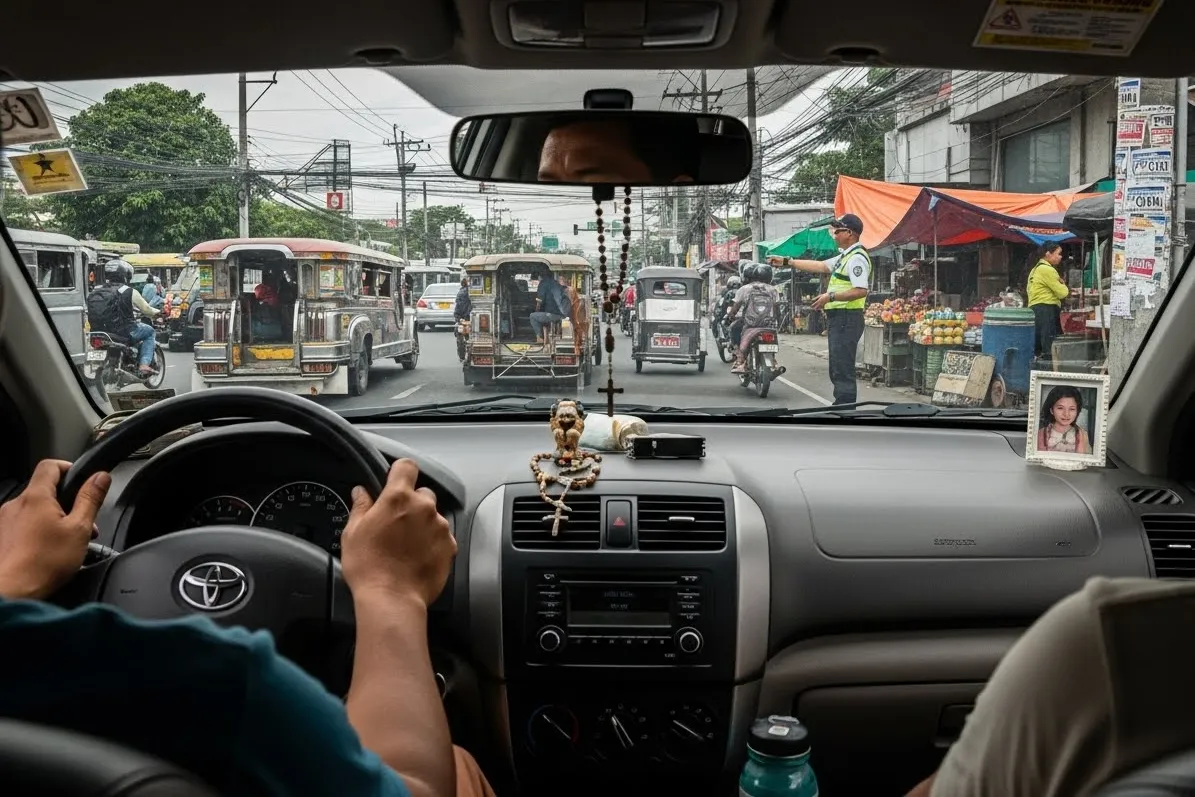

If you’ve ever driven in the Philippines, you know the truth: the road can feel like a daily stress test. One moment you’re cruising, the next may biglang sisingit, walang signal, tapos galit pa sila. Jeepneys stopping anywhere, motorcycles appearing out of nowhere, pedestrians crossing like they’re immortal — and all of us just trying to get home in one piece. Nakakapagod. Nakakainit ng ulo. And honestly, sometimes a little nakakatakot.
- 🚗 Use Your Signal Lights Like Your Life Depends on It
- 🚦 Respect the Right of Way (Kahit Mainit Ulo Mo)
- 🛑 Follow Safe Following Distance (2–3 Seconds Rule)
- 👀 Always Make Eye Contact With Cyclists & Pedestrians
- 🚍 Give Space to PUVs and Motorcycles (They Have Different Physics)
- 💡 Use Headlights the Right Way (Not for Blinding People)
- 📱 Stop Touching Your Phone While Driving
- 🤝 Practice Merge Courtesy (Zipper Merge, Not Singitan)
- 😤 Keep Your Cool on the Road (Road Rage Prevention)
- 🚨 Emergency Etiquette: What Drivers Should Do
- 🛣 The Most Dangerous Road Habits Pinoys Need to Break
- 💼 How Good Driving Etiquette Saves You Money
- ❓ Frequently Asked Questions About Filipino Driving Etiquette
- 🌟 On the Road, Courtesy Is a Kind of Love
- References
But here’s the thing we forget: simple road courtesy isn’t just manners — it literally saves lives. It’s the difference between a clean merge and a collision, a calm ride and a full-on road rage moment, a driver arriving safely and a family getting a terrifying phone call. Courtesy isn’t softness. It’s discipline. It’s awareness. It’s respect for other people who, just like you, have someone waiting for them at home.
This guide breaks down the driving etiquette every Filipino needs — practical, real-world habits built for Philippine roads. Walang lecture vibes, promise. Just the kind of tips that make traffic smoother, prevent accidents, lower your stress, and maybe even restore a little faith in humanity.
🚗 Use Your Signal Lights Like Your Life Depends on It
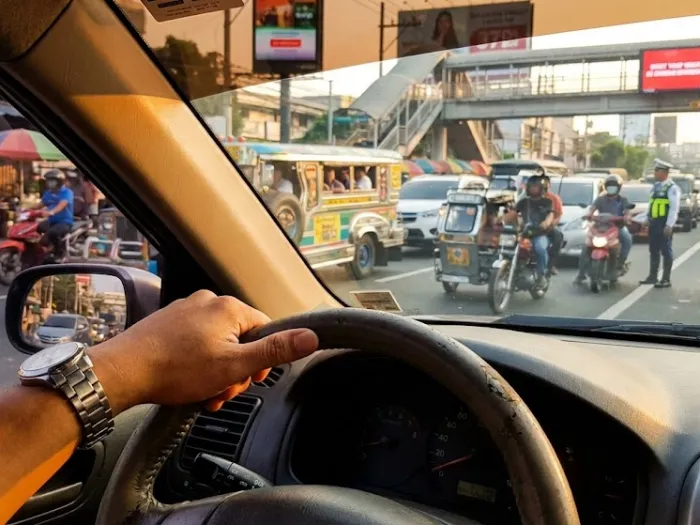
If there’s one courtesy habit that could instantly reduce half of the chaos on Philippine roads, it’s this: use your signal lights. Simple lang, pero for some reason ang daming drivers ang allergic dito. Some forget, some are tamad, and others think signaling gives other drivers a chance to block them. But the truth is the opposite — signaling early keeps everyone safer, including you.
Why Many Filipino Drivers Don’t Signal
- “Baka hindi nila ako papasingitin.”
- “Sandali lang naman, konting liko lang.”
- “Ay, nakalimutan ko.”
- “Hindi kita, tinted.”
These are excuses, not reasons. And every missed signal is a dangerous gamble.
How Lack of Signaling Causes Accidents
No-signal lane changes and turns are among the top causes of collisions in PH. Common scenarios include:
- You changing lanes and a motorcycle hits your blind spot.
- You turning right while a pedestrian is crossing.
- A jeepney suddenly stopping without warning.
Each one could be prevented by a simple switch of your finger.
When to Signal (The Correct Timing)
- Turning left or right: At least 3–5 seconds before the turn
- Changing lanes: 3 seconds before you move
- Parking or pulling over: Signal, slow down gently, then pull over
- U-turns: Same timing as normal turns
The earlier you signal, the more time other drivers have to adjust — and avoid hitting you.
Bonus: Hazards Are NOT “Parking Lights”
A common Pinoy mistake. Hazard lights are for:
- Emergencies
- Sudden vehicle trouble
- Getting pulled over
- Warning of a hazard ahead
They are NOT for:
- Illegal parking
- Double parking
- “Sandali lang, bibili lang ako” moments
Using hazards wrong actually confuses other drivers and makes things more dangerous.
Few-Second Habit, Life-Saving Difference
A signal light takes less effort than checking your phone, honking, or complaining about traffic. But it’s one of the most powerful safety habits a Filipino driver can learn. You’re not just preventing collisions — you’re practicing respect for everyone on the road.
🚦 Respect the Right of Way (Kahit Mainit Ulo Mo)
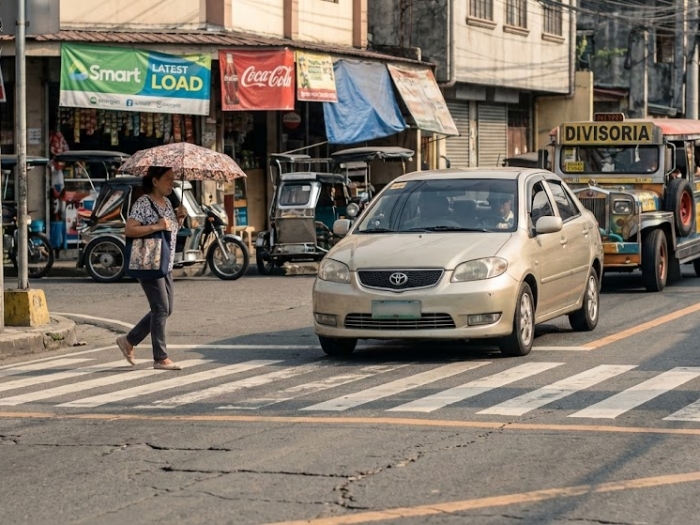
Right of way sounds simple — “kung sino ang nauna, siya ang mauuna” — yet it’s one of the most broken rules on Philippine roads. And every time someone ignores it, you get the usual scene: drivers blocking intersections, motorcycles squeezed into impossible gaps, pedestrians running for their lives, and traffic turning into absolute chaos. Respecting right of way isn’t about being polite. It’s about keeping people safe.
Why Right of Way Matters in the Philippines
Filipino roads are unpredictable. You have:
- Jeepneys stopping anywhere
- Pedestrians crossing kahit walang pedestrian lane
- Delivery riders zigzagging
- Intersections with no traffic enforcers
When everyone insists on “ako muna,” accidents and gridlocks happen. Right of way creates order where there’s usually none.
Who Goes First in Common Situations
Here’s a quick cheat sheet every Pinoy driver should memorize:
At Intersections (No Traffic Light):
- The vehicle on the right goes first.
- If both arrived at the same time, yield to the one on the right.
Rotundas (Roundabouts):
- Vehicles inside the rotunda have the right of way.
- Those entering must wait and merge safely.
Pedestrian Lanes:
- Pedestrians ALWAYS go first. Kahit nagmamadali ka.
- Slow down when you see someone approaching the lane.
Merging Lanes:
- The clean “zipper merge” is the safest and most efficient — one from each lane, alternating.
- Wag makipag-unahan. Wala namang trophy.
Filipino Scenarios Where This Saves Lives
- EDSA merges: Sudden left cuts without yielding cause motorcycle crashes.
- Mall and subdivision exits: Drivers forcing their way out block the flow and cause fender-benders.
- Provincial roads: Pedestrians cross unpredictably — slowing down and yielding prevents tragic accidents.
The Real Mark of a Disciplined Driver
Right of way is one of the purest forms of road courtesy. You’re saying:
“Ayaw kong maperwisyo ka. Gusto ko makauwi ka nang safe.”
And that small gesture builds safer roads for everyone.
🛑 Follow Safe Following Distance (2–3 Seconds Rule)
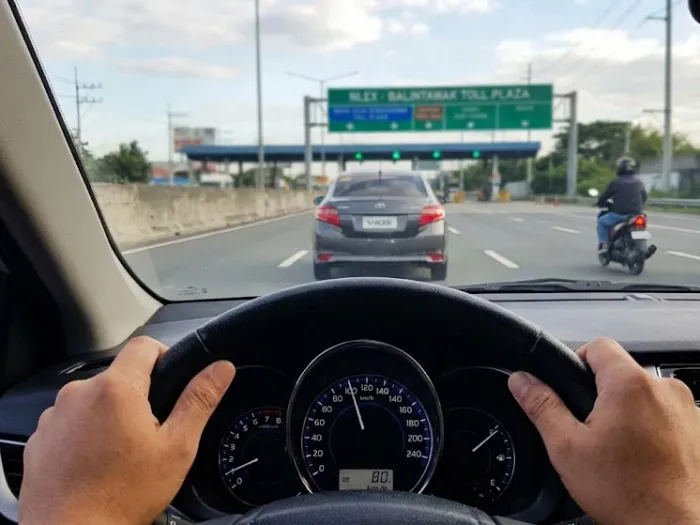
One of the most dangerous habits on Philippine roads is tailgating — staying so close to the car in front that you’re basically reading their plate number like a Netflix subtitle. And yet, sobrang common. Whether it’s impatience, kakulitan, or the belief na “kaya ko ’yan,” tailgating is one of the fastest ways to get into an accident. A single panic brake from the car ahead can send you straight into their bumper.
Related Posts



Why Tailgating Is Extra Deadly in the Philippines
Our roads are full of sudden, unpredictable moments:
- Jeepneys stopping abruptly for passengers
- Tricycles swerving without warning
- Motorcycles weaving in and out
- Pedestrians crossing bigla-bigla
- Potholes and humps appearing without signage
If you’re too close, you will not have time to react — no matter how “galing” you think your reflexes are.
The 2–3 Seconds Rule: Pinakasimple, Pinakamabisang Rule
Here’s how it works:
- Pick a fixed point ahead (poste, signboard, tree).
- When the car in front passes it, start counting:
“One thousand one, one thousand two…” - If you reach the marker before two or three seconds, you’re too close.
Ideal distances:
- 2 seconds in slow-moving city traffic
- 3 seconds in provincial highways or fast roads
- 4–5 seconds in rain, at night, or low visibility
This gives you enough time to brake smoothly — not violently.
How Safe Distance Prevents Collisions
Keeping proper distance:
- Prevents rear-end collisions
- Reduces panic braking
- Gives motorcycles room to maneuver
- De-escalates road rage
- Lowers stress (hindi ka tense every second)
And yes — it saves your brakes, tires, and suspension. Tipid sa maintenance.
“Pero sisingitan nila ako!”
Not true. Staying at a safe distance isn’t a signal for other drivers to abuse you.
It’s a signal that you’re not desperate, reckless, or insecure.
And even if someone does merge, that’s one car — not the end of the world.
Driving Close Doesn’t Make You a Better Driver
It just makes you dangerous.
Giving space makes you smart, calm, and in control.
👀 Always Make Eye Contact With Cyclists & Pedestrians
In a perfect world, pedestrians would cross only on pedestrian lanes and cyclists would stay in their bike lanes. But this is the Philippines — people cross wherever they feel like, and cyclists appear from the left, right, and sometimes even against the flow of traffic. Hindi sila kalaban. They’re some of the most vulnerable people on the road. And your ability to make quick eye contact with them can literally prevent an accident.
Why Eye Contact Matters More Than You Think
A brief glance can tell you:
- If a pedestrian is about to step off the sidewalk
- If a cyclist has seen you and plans to yield
- If someone is confused and needs you to wait
- Whether it’s safe to proceed or give way
Eye contact is a universal signal for:
“Nakikita kita. Safe tayo dito.”
The Filipino Pedestrian Reality
Let’s be honest:
- Many pedestrians don’t look both ways
- Some cross slowly while texting
- Others assume drivers will always stop
- Kids run across the street without warning
Eye contact lets you assess their intention and adjust your speed before anything goes wrong.
Cyclists Need Extra Attention
Cyclists have different movement patterns from cars:
- They wobble when starting
- They can’t brake as hard
- They’re affected by potholes, manholes, or debris
- They can vanish into blind spots easily
A quick eye connection helps you predict their next move.
How to Do It Effectively
- Slow down as you approach crosswalks or crowded sidewalks
- Look at the person, not just the road
- Wait for their nod, pause, or body language
- If unsure — let them go first
Better to lose 2 seconds than cause a lifelong injury.
Humanizing the Road Again
When you look at cyclists and pedestrians, you’re reminded that they’re not obstacles — they’re people. May uuwian, may pamilya, may responsibilidad din. And when they know you see them, they move more predictably and safely.
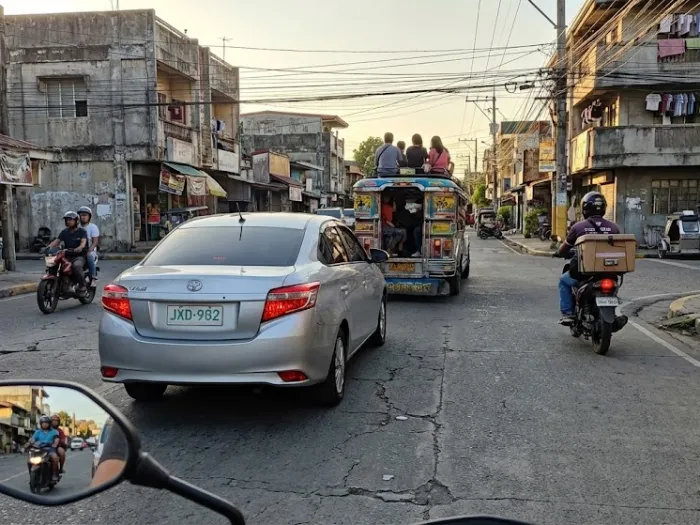
🚍 Give Space to PUVs and Motorcycles (They Have Different Physics)
If there’s one truth about Philippine roads, it’s this: PUVs and motorcycles move differently from private cars. Jeepneys stop abruptly. Tricycles slow down on inclines. Motorcycles weave and wobble, especially on rough roads. Hindi sila bastos — their vehicles simply operate under different physics. And when drivers don’t respect that, accidents happen.
Jeepneys: Sudden Stops Are Part of Their Job
Jeepneys stop anywhere passengers flag them down. Yes, inconvenient. Yes, minsan nakakainis. But they’re operating within the reality of their livelihood.
Which means:
- Keep extra distance behind them
- Expect sudden stops even without brake lights
- Avoid staying directly beside them — they might swerve to load/unload
Giving them space prevents rear-end collisions and side swipes.
Tricycles: Slow Acceleration and Unpredictable Movement
Tricycles struggle on:
- Uphill roads
- Heavy traffic
- Sharp corners
- Wet roads
They often slow down more than expected. They’re also wider than they look.
So when overtaking, make sure you have a clear, wide margin — never squeeze.
Motorcycles: The Most Vulnerable Road Users
Motorcycles are everywhere — delivery riders, commuters, long-distance riders. They’re fast but fragile.
They’re at risk because:
- They’re hard to see in blind spots
- They can wobble from potholes
- They have shorter braking distance
- A small bump can be fatal
Giving motorcycles a full lane of space when possible isn’t just courtesy — it’s protection.
Why Squeezing Them Is Deadly
When drivers force their way into tiny gaps:
- Riders panic
- They lose balance
- They get pushed into gutters or other vehicles
- They swerve dangerously to avoid being hit
Motorcyclists rely heavily on predictable driver behavior. Courtesy here literally saves lives.
How Much Space Should You Give?
- Behind motorcycles: at least 3 seconds following distance
- Beside motorcycles: leave 1 full arm’s length minimum
- Behind jeepneys: 1–2 car lengths
- Passing tricycles: only when you have full visibility
PUVs and Motorcycles Aren’t Obstacles
They’re people working to earn a living, trying to get home alive — same as you. Give them space, and the road becomes safer for everyone.
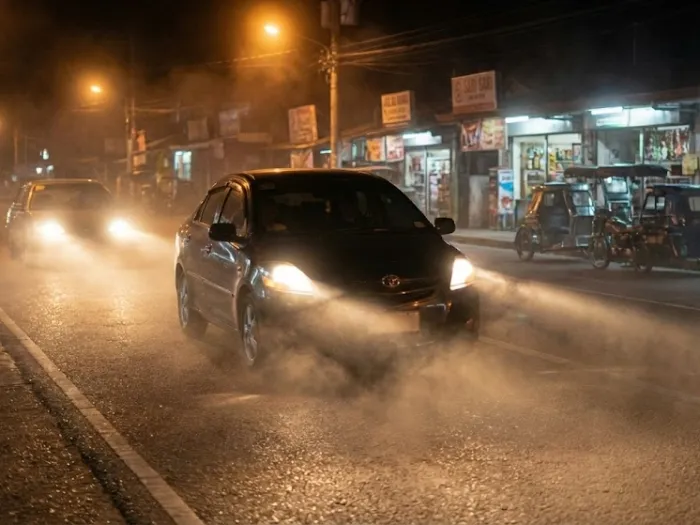
💡 Use Headlights the Right Way (Not for Blinding People)
Headlights are one of the simplest road safety tools — but also one of the most commonly abused by Filipino drivers. Minsan sobrang lakas ng ilaw na parang interrogation room. Other times, drivers forget to turn them on entirely. And worst of all, maraming naka-high beam kahit may kasalubong. Misusing headlights isn’t just annoying — it’s dangerous. A blinded driver is a driver who can crash.
High Beam vs. Low Beam: The Golden Rule
Use LOW BEAM when:
- You’re driving in the city
- There are streetlights
- There are cars in front of you
- May kasalubong ka
Use HIGH BEAM only when:
- It’s completely dark
- Walang kasalubong
- You need extra visibility on unlit provincial roads
High beams aren’t “brighter mode.” They’re for darkness, not dominance.
Why Blinding People Can Cause Real Accidents
When your headlights are too bright or aimed too high:
- The oncoming driver loses vision for 1–3 seconds
- They may drift into your lane
- Motorcycles may wobble or panic
- Pedestrians become harder to see
That’s how head-on collisions and side swipes happen.
Daytime Running Lights (DRL): Use Them Properly
Modern cars have DRLs that turn on automatically.
These are NOT headlights.
They’re for visibility, not illumination.
Always switch to your actual headlights when:
- It’s raining
- It’s dawn or dusk
- You’re inside tunnels or shaded roads
- Visibility is poor
Aftermarket LEDs: A Big Filipino Problem
Cheap, ultra-white LED bulbs look cool pero sobrang silaw.
Many are not road-legal.
If your lights blind people even on low beam, they’re dangerous.
A good rule:
If people keep flashing their lights at you, your headlights are too bright or misaligned.
Courtesy Flashing: When It’s Okay to Use
A quick, gentle flash is acceptable when:
- You’re warning a car of an unsafe merge
- Letting someone know you’re passing
- Alerting a pedestrian at night
But don’t use it to intimidate or pressure someone. Flashing is for safety, not ego.
Light Up the Road, Not People’s Eyes
Your headlights are there to help you see — not to blind everyone else. A little courtesy can prevent countless accidents and keep nightly drives calmer and safer for all.
📱 Stop Touching Your Phone While Driving
We all know it’s dangerous, yet so many Filipino drivers still do it. Yung tipong nagti-TikTok habang humaharurot, nagre-reply sa group chat sa stoplight, or adjusting Waze in the middle of a turn. And the worst part? Most accidents caused by distracted driving happen in just three seconds — the exact amount of time you look down at your phone. That tiny moment can change everything.
Why Phone Use Is Extra Dangerous in the Philippines
Our roads are unpredictable:
- Motorcycles suddenly appear beside you
- Jeepneys brake hard without warning
- Kids run across the street
- Tricycles make abrupt turns
- Potholes pop up like landmines
You don’t have the luxury of looking away.
Even a short glance can cause a crash.
Common Pinoy Phone Mistakes Behind the Wheel
- Checking new Viber or Messenger notifications
- Browsing TikTok on slow traffic (akala mo safe… hindi)
- Adjusting playlists
- Fixing Waze routes while in motion
- Taking photos or videos “for content”
- Holding the phone up to read directions
- Video calls — yes, may gumagawa nito
Each one is a split-second disaster waiting to happen.
The Hands-Off Alternatives That Keep You Safe
- Use a phone mount. This is the bare minimum.
- Turn on voice navigation (Waze/Google Maps).
- Enable Do Not Disturb While Driving.
- Set your playlist BEFORE you move.
- Answer calls through Bluetooth or earphones — never handheld.
If it’s truly urgent, pull over.
Nothing on your phone is worth risking someone’s life — including yours.
The Law Is Clear (Anti-Distracted Driving Act)
You can get penalized if:
- You’re holding your phone
- Your phone blocks your line of sight
- You’re texting while driving
- You’re watching videos
Fines go up to ₱20,000 — but the real cost is far worse if an accident happens.
Your Focus Is the Most Valuable Tool You Have
Not your brakes, not your engine — your attention.
Phone use steals that faster than anything else on the road.
Be present. Stay sharp. Arrive alive.
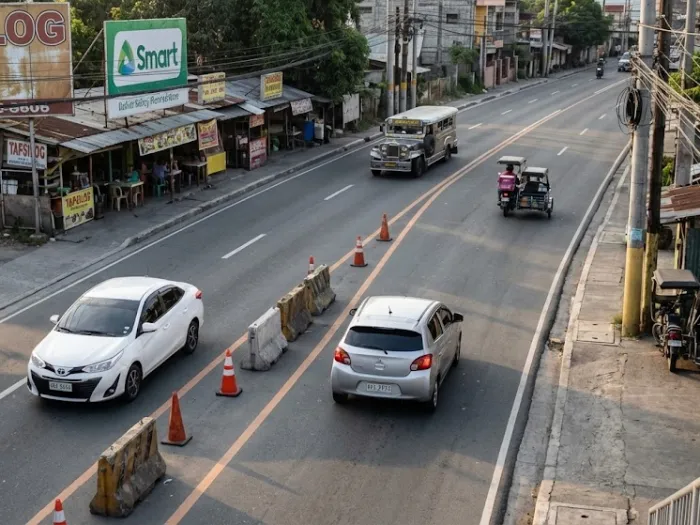
🤝 Practice Merge Courtesy (Zipper Merge, Not Singitan)
If there’s one habit that could completely transform Philippine traffic overnight, it’s this: learn to merge properly.
The clean, simple, civilized zipper merge.
Isang sasakyan mula rito, isang sasakyan mula roon.
Smooth. Predictable. Walang banggaan. Walang inisan.
Unfortunately, many Filipino drivers treat merging like a competition. Biglang singit. Takbong parang may award. And that’s exactly why roads choke, tempers flare, and accidents happen.
Why Pinoys Hate Merging (But Shouldn’t)
Common toxic beliefs:
- “Pag nagbigay ako, baka maunahan ako ng lahat.”
- “Ayoko magpasingit — ang tagal ko nang nakaabang.”
- “Kailangan unahan ko siya bago siya lumiko.”
Pero sa totoo lang, racing to block someone only slows everyone down.
What a Proper Zipper Merge Looks Like
Here’s the simplest breakdown:
- Two lanes are about to become one.
- Both lanes keep moving all the way to the merge point.
- At the merge, drivers take turns — left, right, left, right.
- No blocking, no panic braking, no “singit kung singit.”
It’s efficient because every car keeps moving forward at a steady pace.
Why This Saves Lives and Eases Traffic
- Prevents sudden swerves
- Reduces blind spot accidents
- Eliminates harsh braking
- Slows down road rage
- Keeps merging lanes flowing smoothly
Countries that enforce zipper merges see up to 40% faster traffic flow. Totoo ’yan.
Pinoy Merge Scenarios That Need Courtesy
- EDSA lane closures
- U-turn slot merges
- Construction zones
- Narrow provincial bridges
- Mall exits connecting to busy roads
All of these become safer when drivers alternate politely.
Want to Look Like a Mature, Professional Driver?
Do this:
- Slow down slightly
- Leave enough space
- Let one car in
- Then take your turn
Not only is it safe — it instantly makes the road feel less stressful and more human.
“Pero ang daming abusado.”
Yes, may ganun.
But your courtesy still matters. And most people, when treated with respect, actually reciprocate.
Courtesy is contagious. Someone has to start it — and it might as well be you.
😤 Keep Your Cool on the Road (Road Rage Prevention)
Philippine roads will test your patience like nothing else. Biglang singit, maling preno, maling ilaw, maling lahat. Add heat, traffic, and stress from work — boom, road rage. But here’s the hard truth: losing your temper makes you a worse driver, and worse, it can push an already risky situation into something violent or tragic. Staying calm isn’t weakness. It’s survival.
The Most Common Filipino Road Rage Triggers
- Drivers who don’t signal
- Jeepneys stopping anywhere
- Motorcycles cutting too close
- Slow tricycles blocking fast lanes
- Counterflowing private cars
- Pedestrians crossing anywhere
- People honking non-stop
Any of these can flip your mood from okay to “ano ba ’yan?!” in a heartbeat.
Why Losing Your Temper Makes You Dangerous
When you’re angry:
- Your reaction time slows
- Your decisions become emotional
- You accelerate without thinking
- You tailgate to “teach someone a lesson”
- You stop noticing blind spots
And that’s when accidents happen — not because you’re a bad driver, but because you’re not thinking clearly.
The 5-Second Reset Trick
Whenever you feel your temper rising:
- Loosen your grip on the wheel
- Take a slow breath (inhale 3 seconds, exhale 3)
- Roll your shoulders back
- Remind yourself: “Gusto ko lang umuwi nang safe.”
- Return attention to your lane
Small, simple, powerful. Works every time.
Know When to Yield (Even If You’re Right)
You win nothing by proving a point on the road.
You gain everything by avoiding a fight.
Letting someone go ahead of you is not defeat.
It’s wisdom. It’s emotional intelligence.
It’s choosing safety over ego.
Avoid Confrontation at All Costs
If someone is aggressive:
- Do NOT roll down your window
- Do NOT stare back
- Do NOT honk out of anger
- Do NOT follow or chase
- Keep your doors locked
- Drive to a well-lit, populated area if you feel threatened
You don’t know their state of mind or what they’re capable of.
Your Mood Controls the Car
A calm driver is a safe driver.
A calm driver reacts smarter.
A calm driver avoids problems before they even begin.
Staying cool is a skill — one that protects you, your passengers, and the people waiting for you at home.
🚨 Emergency Etiquette: What Drivers Should Do
Emergencies on the road don’t happen often — but when they do, every second counts. And the way you respond as a driver can either prevent further danger or make things worse. Unfortunately, many Filipinos panic, slow down just to “makisilip,” or block the way without realizing it. Emergency etiquette is all about staying alert, calm, and predictable, so you keep yourself and others safe.
When There’s an Accident Ahead
- Slow down gradually, not abruptly
- Keep your lane — wag biglang lumipat
- Turn on low-beam headlights if visibility is poor
- Do NOT stop to take photos or videos
- Do NOT crowd the scene unless you are offering real help
Rubbernecking is one of the biggest causes of secondary accidents in the Philippines.
How to Respond to Ambulances and Emergency Vehicles
Filipino drivers often freeze or don’t know where to move. Here’s the correct approach:
- Pull to the right when possible
- If there’s no space, slow down and create a clear path
- Never race with an ambulance
- Never follow closely behind it to “free-ride” traffic
- Signal your intentions clearly
Seconds matter — someone’s life might depend on it.
If Your Car Breaks Down
Breakdowns are stressful, but staying visible and calm prevents disaster.
Do this immediately:
- Move to the shoulder or far right
- Turn on hazard lights
- Use your early warning device (triangle) 4–5 meters behind your car
- Stay inside the vehicle if the area is unsafe
- Call for roadside assistance
- At night, keep interior lights on for visibility
A stalled car without warnings is a deadly trap, especially on dark provincial roads.
If You Blow a Tire (Pumutok ang Gulong)
- Keep a firm grip on the wheel
- Do NOT brake hard
- Let the car slow down naturally
- Steer gently toward the shoulder
- Turn on hazards once you’re off the lane
This alone prevents rollovers and pileups.
When Roads Flood Suddenly
- Avoid driving into water you can’t see the depth of
- If already in it, drive slowly and steadily — wag sumabay sa agos
- If water reaches your car’s grill, stop and reverse out
- Turn off AC to prevent belt slippage
Floodwater hides potholes, open manholes, and debris.
Night Emergencies: Visibility Is Everything
- Keep headlights on low beam
- Use hazards only if you’re fully stopped
- Wear something reflective if you must exit the car
- Avoid crossing dark roads unless absolutely necessary
Being seen is half of staying safe.
Emergency Etiquette Isn’t Optional
It’s part of responsible driving. Mahal ka ng pamilya mo. Someone is waiting for you. Following these steps — calmly, consistently — helps ensure you always get back to the people who matter.
🛣 The Most Dangerous Road Habits Pinoys Need to Break
Some driving behaviors are annoying. Others are inconvenient. But a few are downright deadly — and sadly, they’re common on Philippine roads. Whether it’s impatience, bad habits passed down from older drivers, or the belief na “ganito kasi dito,” these dangerous moves put everyone at risk. Breaking them is one of the biggest steps toward a safer driving culture.
Counterflowing (The #1 Killer Move)
Counterflowing is reckless, selfish, and one mistake away from a head-on collision. Hindi ka special, hindi ka exempted.
- One miscalculation = instant disaster
- Causes long traffic on both sides
- Forces other cars into dangerous positions
- Terrifies pedestrians and cyclists
There is never a valid excuse for counterflowing unless you are an actual emergency responder.
Sudden Full Stops (Walang Warning, Walang Sign)
This includes:
- Stopping to talk to someone
- Stopping to buy something from a tindahan
- Stopping to drop off a passenger
- Stopping because “naguguluhan sa Waze”
A sudden stop is one of the fastest ways to cause a rear-end collision.
Abrupt U-Turns
The classic “hinto-biglang liko” move.
A U-turn requires space, visibility, and patience.
Doing it impulsively or from the wrong lane is a recipe for disaster, especially for motorcycles.
Blocking Intersections (Yellow Box Violations)
When drivers enter an intersection without space to exit, they block everyone — including ambulances and PUVs.
This bad habit:
- Causes gridlocks
- Traps pedestrians
- Increases road rage
- Disrupts entire traffic flow
If you can’t fully clear the intersection, don’t enter.
Driving With Busted or No Lights
You can’t negotiate with physics. If people can’t see you, they can hit you.
Common causes of invisible cars:
- Broken tail lights
- No headlights at dusk
- Faulty brake lights
- Dim or burned-out bulbs
Visibility is safety. Don’t drive blind — or make others blind.
Overconfidence (The Silent Danger)
The “matagal na ako nagda-drive” mindset is one of the biggest risk factors for accidents.
Overconfidence leads to:
- Speeding
- Tailgating
- Ignoring blind spots
- Overtaking recklessly
- Dismissing rules
Skill doesn’t replace caution. Even veteran drivers crash when they forget that.
Every Habit Can Change (Kahit Unti-Unti Lang)
You don’t need to be perfect — just aware.
Breaking these habits makes the road safer not just for you, but for thousands of strangers you’ll never meet. And maybe that’s the point: road courtesy is respect for people you don’t even know, yet value enough to keep safe.
💼 How Good Driving Etiquette Saves You Money
Road courtesy isn’t just about being a “good driver.” It also quietly protects your wallet. Every smooth brake, every clean merge, every moment of patience adds up to real savings. The less stress you put on your car — and yourself — the less you spend. Driving etiquette is financial etiquette. Totoo ’yan.
Fewer Fines and Penalties
Good etiquette naturally aligns with LTO rules. When you signal properly, respect lanes, stop at crosswalks, and avoid distractions, you also avoid:
- Anti-Distracted Driving fines
- Illegal parking fines
- Reckless driving citations
- Obstruction and yellow-box violations
These range from ₱1,000 to ₱5,000 — sometimes more. Imagine avoiding all that simply by being courteous.
Lower Fuel Consumption (Smooth Driving = Tipid)
Aggressive driving burns fuel.
- Sudden braking
- Rapid acceleration
- Frequent lane changes
- Tailgating and harsh stops
All of these force your engine to work harder. Calm, predictable driving improves fuel efficiency by up to 10–20 percent.
More courtesy, less gas money burned.
Reduced Wear and Tear
Your car’s parts will thank you when you stop driving like you’re in Fast & Furious.
Good etiquette =
- Less brake pad wear
- Longer tire lifespan
- Better suspension health
- Fewer alignment issues
Even your transmission and engine experience less stress.
Fewer Insurance Claims = Lower Premiums
Insurance companies reward low-risk drivers.
When you’re careful:
- You avoid collisions
- You avoid filing claims
- Your record stays clean
A clean record often leads to better premiums and easier renewals.
Preventing Accidents Saves You the Most
Just one minor accident can lead to:
- 3–5 days of lost time
- Stressful insurance processing
- Deductibles
- Repair costs
- Possible medical fees
- Commuting expenses while your car is in the shop
Driving calmly and courteously avoids all of that. Which is worth more than any single “shortcut” you take on the road.
Courtesy Pays Off — Literally
Every gentle turn, every good habit, every avoided argument… it all adds up. Courtesy keeps you safe, but it also keeps your savings intact. Tipid, tahimik, at mas kalmado ang buhay.
❓ Frequently Asked Questions About Filipino Driving Etiquette
• What is the most important driving etiquette rule in the Philippines?
Using your signal lights consistently is one of the most crucial safety habits. Signals help other drivers predict your next move, which prevents collisions and road rage. It’s a small action, but it drastically improves traffic flow and overall road safety.
• Do I always have to give way to pedestrians?
Yes. Pedestrians always have the right of way, especially on marked crossings. Even if they cross unexpectedly, slowing down and yielding keeps everyone safe. Remember, a pedestrian has zero protection compared to a vehicle.
• How far should I stay behind the car in front of me?
Use the 2–3 seconds rule. Pick a fixed point and count “one thousand one, one thousand two.” If you reach the marker too early, you’re too close. This prevents rear-end accidents, especially in unpredictable PH roads.
• Should I give way to motorcycles?
Yes — motorcycles are the most vulnerable on the road. Giving them space prevents wobbling, side swipes, and panic reactions. Treat them like they’re part of your lane, not obstacles you need to squeeze past.
• When is it okay to use hazard lights?
Hazards should only be used during emergencies or when your vehicle is stopped due to trouble. They are not for parking, slowing down for rain, or “sandali lang” moments. Misuse confuses drivers and increases crash risks.
• How do I properly merge in heavy traffic?
Use the zipper merge. Both lanes move forward and take turns — left car, right car, left car, right car. This reduces bottlenecks and keeps traffic flowing. Singitan is the reason many merges slow down and cause road rage.
• What should I do when an ambulance is approaching?
Slow down, signal, and move to the right if possible. Create a clear path and avoid tailgating the ambulance. Chasing or blocking emergency vehicles is illegal and extremely dangerous.
• Is it dangerous to drive with high beams on in the city?
Yes. High beams can temporarily blind oncoming drivers and motorcyclists. Use low beam when there’s street lighting, oncoming traffic, or vehicles ahead. High beam is only for dark, unlit roads.
• Can I adjust Waze or my phone if I’m stuck in traffic?
No. Under the Anti-Distracted Driving Act, touching your phone while driving is illegal even when traffic is slow. Use voice navigation, a phone mount, or pull over if you need to make changes.
• How do I avoid road rage?
Stay aware of your emotional triggers, give yourself space, and breathe before reacting. Yielding even when “you’re right” often prevents escalation. Remember — arriving home safely is worth more than proving a point.
🌟 On the Road, Courtesy Is a Kind of Love
Every time you take the wheel, you’re not just a driver — you’re a protector. Someone’s parent, someone’s child, someone’s partner, someone’s entire world. And everyone you meet on the road is the same. Each jeepney driver has a family waiting. Each rider is trying to earn a living. Each pedestrian is just trying to get home.
Road courtesy isn’t about being soft or “too kind.” It’s choosing to respect people you don’t even know. It’s choosing calm over ego, patience over pride, safety over shortcuts. It’s the quiet belief that everyone deserves to arrive home safely — including you.
So the next time traffic tests your temper or someone makes a dumb move, breathe. Signal. Yield. Give space. Act like the kind of driver you hope your loved ones meet on the road. And little by little, kilometer by kilometer, we create the kind of driving culture we all dream of — safer, calmer, and full of life.