

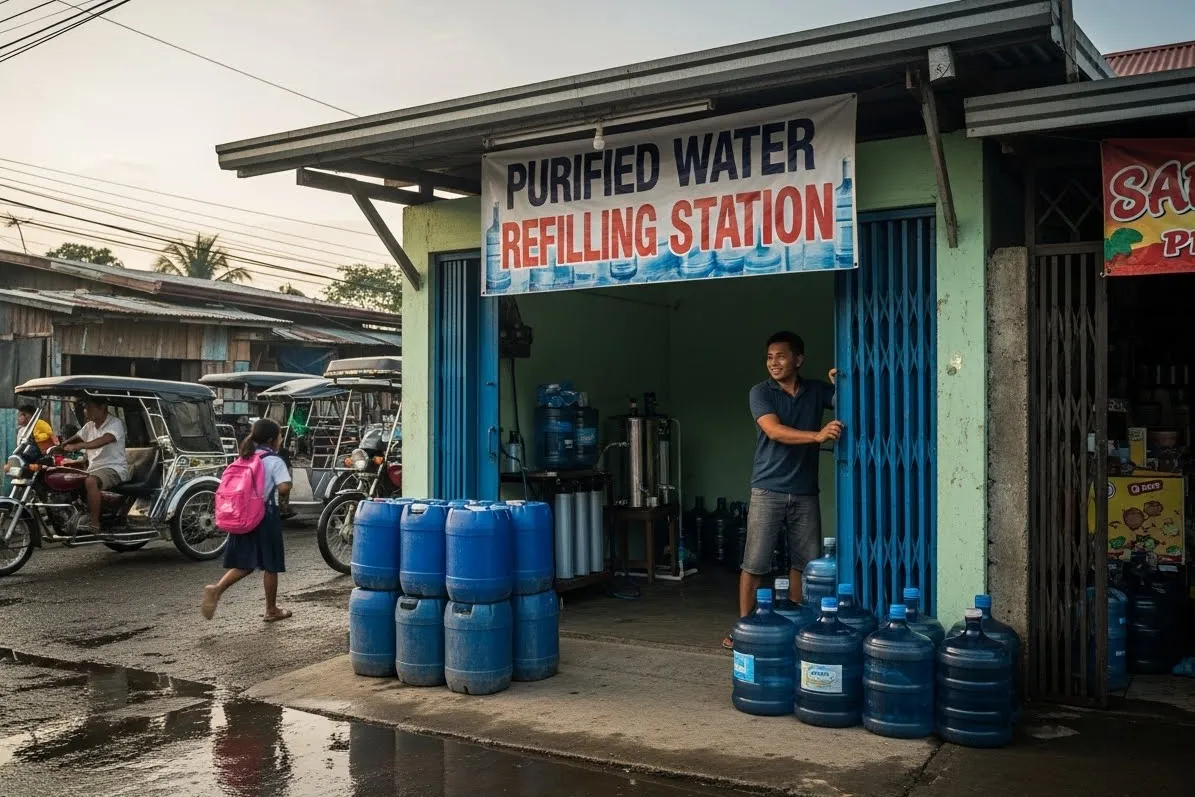

Starting a water refilling station is one of the few businesses in the Philippines that never goes out of demand. Families need safe drinking water every single day — rain or shine, holiday or weekday, crisis or calm. That’s why so many Filipinos look at this business and think, “Stable ito. Pang-long term.” And they’re right. But the real challenge is knowing where to begin.
- 💧 Step 1: Understand How a Water Refilling Station Works
- 🏠 Step 2: Choose the Right Location
- 🧰 Step 3: Prepare Your Startup Capital & Budget
- 🛠️ Step 4: Buy Your Equipment & Filtration System
- 🧾 Step 5: Complete DTI, BIR & LGU Permits
- 🧑🔧 Step 6: Set Up Your Facility & Hire Staff
- 🚚 Step 7: Launch Your Water Station & Start Operations
- 💵 ROI: When Will You Break Even?
- ⚠️ Common Mistakes When Starting a Water Refilling Station
- 🛡️ DOH Compliance & Water Quality Requirements
- ❓ FAQs: Water Refilling Station (Philippines)
- 🌟 The Kind of Business That Grows With Your Community
- References
Maybe that’s why you’re here. Maybe you’ve been researching capital, permits, equipment, ROI… and the more you read, the more overwhelming it feels. Ang daming numbers, ang daming brands, ang daming requirements. But deep down, you know this business has potential — steady income, essential service, and a clear need in every barangay.
This guide is built exactly for that moment. For you.
A complete, practical, 7-step breakdown that shows you how a water refilling station actually works, how much it truly costs, what equipment matters, what permits you need, and how long before you earn your money back. Walang kalituhan, walang technical jargon, just a clear roadmap designed for everyday Pinoys who want a real, reliable, sustainable business.
If you’ve been waiting for a sign — or a guide that finally makes everything make sense — you found it.
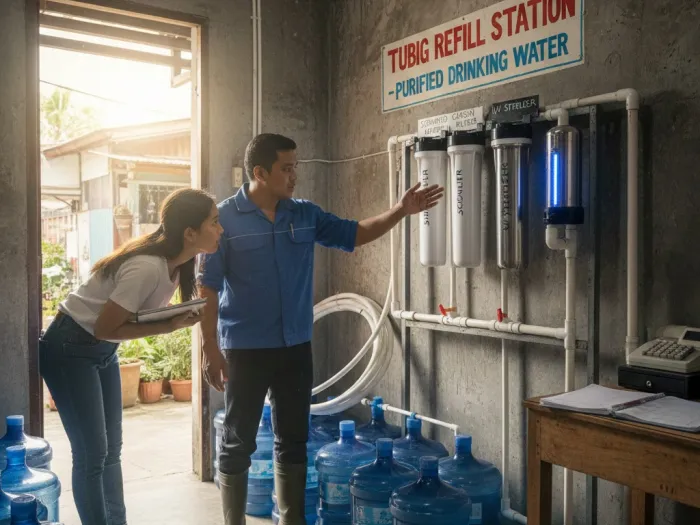
💧 Step 1: Understand How a Water Refilling Station Works
Before you invest a single peso, you need to understand how the business actually works behind the scenes. A lot of first-time owners jump straight into buying machines without fully grasping the process — and that’s usually where mistakes begin. When you understand the flow of purification, equipment, and daily operations, everything else becomes easier: choosing equipment, setting the layout, hiring the right people, even calculating your ROI.
How a Water Refilling Station Produces Clean Drinking Water
A typical station uses a multi-stage filtration process that removes sediments, odors, chemicals, bacteria, and contaminants. The most common and trusted method in the Philippines is Reverse Osmosis (RO), paired with UV sterilization and a series of filters.
Here’s the basic flow:
- Pre-filtration: Removes sand, rust, dirt, and sediments.
- Carbon filtration: Removes chlorine, organic chemicals, and odors.
- Reverse Osmosis membrane: Removes dissolved solids, heavy metals, and contaminants.
- UV Sterilization: Kills bacteria and microorganisms in the final stage.
- Storage tank: Holds purified water ready for dispensing.
- Refilling area: Clean, sealed containers are filled, capped, and sealed.
Different Types of Purification Systems
You can choose from three common system types depending on your target market:
Standard RO System (Most Common)
- 6–12 filtration stages
- Affordable and reliable
- Ideal for most barangays and small businesses
Mineralized / Alkaline Systems
- Adds minerals back after RO
- Higher price per container
- Targets health-conscious customers
Advanced Multi-Stage Purification Systems
- Higher output
- More stable TDS (total dissolved solids) quality
- Used by larger stations with high daily demand
Basic vs Enhanced Filtration Systems (Table)
| System Type | Description | Best For |
|---|---|---|
| Basic RO System | Standard 6–12 stage purification | Small communities, starter setups |
| Mineralized RO | Adds minerals for taste & health | Health-conscious or premium market |
| Alkaline RO | Higher pH, premium pricing | Gyms, clinics, wellness customers |
| High-Capacity RO | Faster output, higher volume | Busy areas, delivery-heavy operations |
Your Daily Operations at a Glance
- Washing and sanitizing containers
- Purifying water continuously
- Refilling and sealing gallons
- Handling walk-in customers
- Delivering to households
- Regular filter maintenance
- Daily cleaning & sanitation (DOH requirement)
Understanding these fundamentals gives you the confidence to move forward. You now know the inner workings — what to expect, what to prepare for, and what quality means in this business.

🏠 Step 2: Choose the Right Location
Your location can make or break your water refilling station. You can have excellent equipment, the best filtration system, and competitive pricing — pero kung pangit ang location, mahirap talaga kumita. Since water delivery is a huge part of the business, you want a spot that’s easy to access, easy to find, and positioned close to your target households.
What Makes a Good Location
Here are the core elements that separate winning spots from high-risk ones:
High Residential Density
The more households within 300–500 meters, the better. Water refilling stations thrive where people buy gallons every 3–7 days.
Stable Water Source
Even though the water is purified, you still need a reliable supply from the local water district or deep well. Low pressure = low production.
Easy Access for Motorcycles/Tricycles
Delivery is your lifeline. A tight street or a cluttered alley slows operations and reduces orders per day.
Good Visibility
If your store can be seen easily from the road, that’s free marketing every single day.
Manageable Competition
One or two competitors is fine — that just proves there’s demand. But if there are 5+ stations in one small barangay, prepare for a slower start.
Minimum Space Requirements
A water refilling station typically needs:
- 20–30 sqm for small setups
- 30–50 sqm for medium setups with delivery
- 50 sqm+ for stations with high-capacity RO systems
Space must accommodate:
- Filtration system
- Refilling area
- Container washing station
- Storage tanks
- Waiting area
- Delivery motorcycles
Ideal vs Risky Locations (Table)
| Location Type | Verdict | Why |
|---|---|---|
| Dense residential barangay | ⭐ Best | High repeat demand, perfect for delivery |
| Near apartments/boarding houses | ⭐ Strong | Frequent orders, steady income |
| Near sari-sari stores | 👍 Good | Walk-in customers + pickup partners |
| Along a quiet dead-end street | ⚠️ Risky | Low visibility, hard access for deliveries |
| Street with 4–5 existing stations | ⚠️ Risky | Slow ROI unless you offer better water quality |
| Far from main road | ❌ Weak | Poor foot traffic and harder deliveries |
| Areas with unstable water supply | ❌ Avoid | Slow production, inconsistent output |
Questions to Ask Before Choosing a Spot
- Ilan ang households in this area?
- Ilan ang competitors within 500 meters?
- Stable ba ang water pressure?
- Accessible ba for motorcycles?
- Visible ba ang shop from the street?
- May space ba for future expansion?
A good location doesn’t have to be fancy — it just needs people, accessibility, and consistent water pressure. If you have these three, you’re off to a strong start.
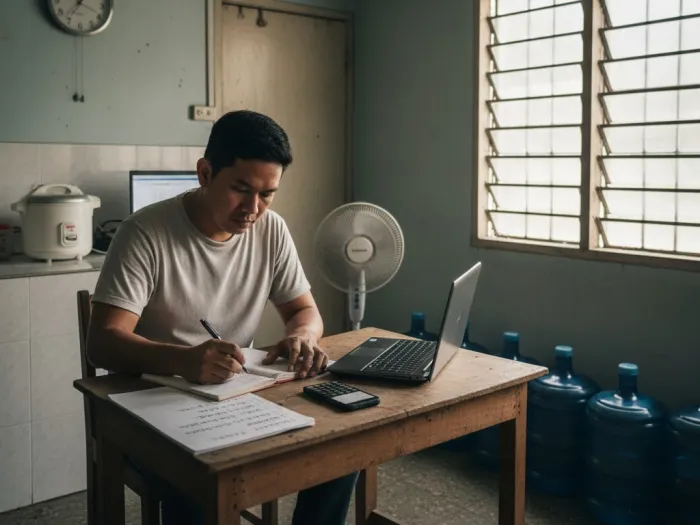
🧰 Step 3: Prepare Your Startup Capital & Budget
This is the part everyone wants to know upfront — magkano ba talaga ang kailangan? Water refilling stations aren’t the cheapest businesses to start, but they’re also not as expensive as people assume. Most setups fall between ₱200,000 to ₱500,000, depending on equipment quality, location, build-out, and whether you go independent or franchise. The key is understanding where your money actually goes so you can plan smart and avoid overspending.
Where Your Capital Goes
Your startup budget typically covers four major areas:
Related Posts


Equipment & Filtration System
This is your biggest expense — usually 40–60% of your total capital.
Includes:
- RO system
- Pumps
- UV sterilizers
- Pressure tanks
- Storage tanks
- Stainless refilling table
- Filters & housings
Store Renovation & Setup
You’ll need to prepare the space so it meets DOH sanitation requirements.
This includes:
- Tiled washing area
- Proper drainage
- Electrical upgrades
- Partitioning and layout
- Basic signage
Permits & Certifications
Water stations require more permits than regular businesses.
Includes:
- DTI, BIR, and LGU permits
- Sanitary Permit
- Fire Safety Certificate
- DOH water potability test
- Annual water testing fees
Initial Inventory & Operations
- Gallon containers
- Caps & stickers
- Cleaning chemicals
- First month’s rent
- Cash buffer for salaries & utilities
Franchise vs Independent Setup
Many new owners wonder if they should franchise or build independently. Here’s the real-world comparison:
Franchise
- Higher upfront cost
- Includes training & branding
- Easier for beginners
- Less customization
Independent
- Lower capital
- Full control over quality & pricing
- More freedom in sourcing equipment
- Requires more research
Sample Capital Breakdown (Table)
| Budget Level | Estimated Cost | What You Get |
|---|---|---|
| Low Budget (₱200k–₱250k) | Basic RO system, small space, minimal renovation | Best for small communities & home-based setups |
| Mid Range (₱300k–₱400k) | Better filtration, proper layout, delivery setup | Ideal for most barangay-level operations |
| High Budget (₱450k–₱500k+) | High-capacity RO, premium setup, franchise or upscale location | For larger demand & competitive areas |
Other Costs to Expect
- Water test fees: ₱2,000–₱3,000
- Gallon inventory: ₱150–₱200 each
- Initial marketing: ₱3,000–₱10,000
- Delivery motorcycle: ₱40,000–₱70,000 (if brand-new under installment)
A well-budgeted water refilling station avoids delays during construction, meets DOH standards faster, and positions you for a quicker ROI. The goal is not to spend the least — but to spend smart.
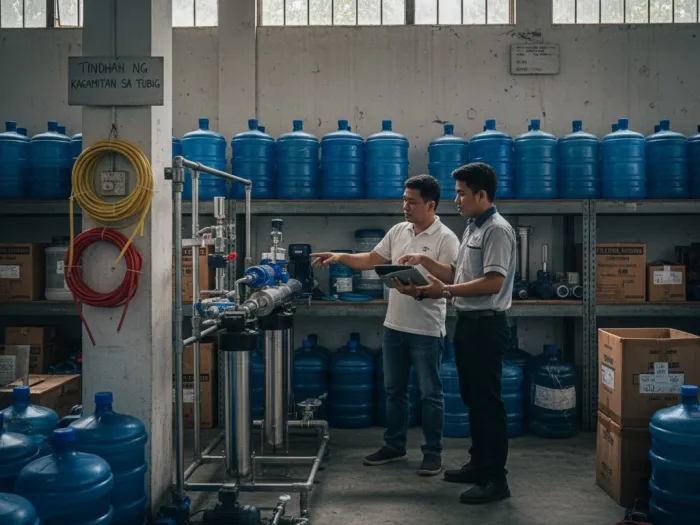
🛠️ Step 4: Buy Your Equipment & Filtration System
Your equipment is the heart of your water refilling station. Kahit gaano pa kaganda ang location mo, if your filtration system is weak or unreliable, you’ll lose customers fast. People can taste the difference. And in this business, water quality is everything. That’s why choosing the right system, capacity, and supplier matters more than anything else you’ll spend on.
Essential Equipment You Absolutely Need
A complete setup usually includes:
- Multi-stage Reverse Osmosis (RO) system
- Sediment filters (5 microns, 1 micron)
- Granular activated carbon filter
- Carbon block filter
- UV sterilizer
- High-pressure pump
- Stainless refilling station/table
- Storage tanks (200–500 gallons)
- Pressure tank
- Ozone generator (optional but recommended)
- Water softener (for hard water areas)
- Gallon washer & sanitizer
Note: High-quality RO membranes and UV bulbs need periodic replacement. Always check the price and frequency of replacement when choosing a supplier.
How Much Do These Machines Cost?
Prices depend on capacity, brand, and supplier reliability.
Small Capacity (Good for 40–60 containers/day)
- Price: ₱80,000 – ₱120,000
- Best for starter setups
- Cheaper to maintain
- Good for small barangays
Medium Capacity (100–200 containers/day)
- Price: ₱150,000 – ₱250,000
- Ideal for delivery-heavy operations
- Most recommended for new owners
High Capacity (300–500 containers/day)
- Price: ₱300,000 – ₱500,000+
- For high-demand areas
- Stronger pumps, bigger tanks, higher output
Pros & Cons: Franchise vs Independent Equipment
If you’re choosing equipment independently versus franchising:
Franchise Setup
Pros:
- Includes training
- Pre-approved suppliers
- Complete branding & uniform look
- Faster setup for beginners
Cons:
- More expensive
- Less freedom in customization
- Monthly royalty (in some brands)
Independent Setup
Pros:
- Lower equipment cost
- Freedom to choose suppliers/parts
- Easier to upgrade or add new features
- No royalties ever
Cons:
- Research-heavy
- Must rely on DOH standards yourself
- Quality varies by supplier
Equipment Price Table (Philippine Market)
| Equipment | Price Range | Notes |
|---|---|---|
| Basic RO System | ₱80,000 – ₱120,000 | Entry-level, small areas |
| Medium RO System | ₱150,000 – ₱250,000 | Best balance of cost & capacity |
| High-Capacity RO | ₱300,000 – ₱500,000+ | For high-demand & delivery-heavy |
| Stainless Refilling Table | ₱12,000 – ₱20,000 | Required by DOH |
| UV Sterilizer | ₱5,000 – ₱10,000 | Final stage sanitation |
| Storage Tank (300–500 gal) | ₱12,000 – ₱25,000 | Food-grade, sealed |
| Gallon Washer | ₱6,000 – ₱15,000 | Manual or semi-automatic |
| Ozone Generator | ₱7,000 – ₱12,000 | Recommended for sealing room sanitation |
Choosing the Right Supplier
Before paying anything, ask these questions:
- Do they provide installation + training?
- Are they DOH-compliant?
- How often do they replace filters?
- How much are replacement parts?
- Do they offer after-sales support?
- Do they provide a layout plan for your store?
A good supplier doesn’t just sell machines — they guide you from installation to certification.
Strong equipment equals strong customer trust. And in this business, trust is your entire brand.
🧾 Step 5: Complete DTI, BIR & LGU Permits
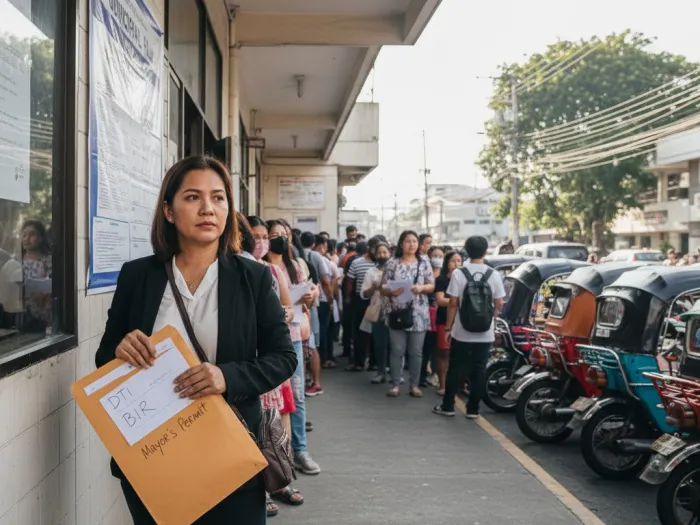
A water refilling station is more regulated than most small businesses because you’re dealing with drinking water. So aside from regular business permits, you also need health and sanitation clearances. It sounds intimidating at first, pero once you know the flow, malinaw na siya: DTI for your business name, BIR for taxes and receipts, LGU + DOH-related clearances for local and health compliance.
DTI Registration – Business Name
This confirms that your water refilling station name is officially yours.
Requirements:
- Valid government ID
- 2–3 proposed business names
- Business address
- Email and mobile number
Basic steps:
- Go to the DTI BNRS website (bnrs.dti.gov.ph).
- Choose New Business Registration.
- Fill in your personal details and proposed names.
- Choose business scope (barangay, city, regional, national).
- Pay the fee and download your DTI Certificate.
DTI fees:
| Scope | Fee |
|---|---|
| Barangay | ₱200 |
| City / Municipality | ₱500 |
| Regional | ₱1,000 |
| National | ₱2,000 |
DTI registration is valid for 5 years.
BIR Registration – Taxes, COR & Official Receipts
Next, you register your water station with BIR so you can pay taxes properly and issue official receipts to customers, offices, or suki accounts.
What BIR gives you:
- Certificate of Registration (Form 2303)
- Authority to Print Official Receipts or use e-receipts
- Books of accounts
Requirements:
- DTI Certificate
- Valid ID
- Proof of business address (lease contract or barangay cert)
- BIR Form 1901 (for sole proprietors)
- TIN (or application if you don’t have one yet)
Typical BIR-related fees:
| Item | Typical Cost |
|---|---|
| Annual Registration Fee | ₱500 |
| Documentary Stamp Tax | ₱30+ |
| Official Receipt printing | ₱1,500–₱3,000 |
Once registered, you must file returns regularly (even if “no sales”) and keep your receipts/books in order.
LGU Permits – Barangay, Mayor’s Permit & Sanitary Compliance
For a water refilling station, LGU requirements are more detailed because they involve public health, zoning, and safety.
Barangay Business Clearance
Usually your first LGU step.
You’ll typically need:
- DTI Certificate
- Valid ID
- Lease contract or barangay certification
- Filled-out application form
Mayor’s Permit (Business Permit)
Issued by the City/Municipal Hall. This permit confirms that your water refilling station is allowed to operate in your specific location.
Commonly required:
- Barangay Clearance
- DTI Certificate
- BIR COR (Form 2303)
- Lease contract / land title / contract of use
- Fire Safety Inspection Certificate (BFP)
- Sanitary Permit (City Health Office)
- Occupancy/Zoning clearance (if applicable)
- Valid IDs of owner
DOH & Water Quality-Related Requirements
Because you are selling drinking water, you also need:
- Sanitary Permit (renewed annually)
- Health certificates for workers handling water
- Water bacteriological test (usually monthly)
- Physical-chemical test (periodic, e.g., twice a year)
- Water potability certificate from a DOH-accredited lab
These tests prove your water is safe for drinking and must be done regularly, not just once.
Full Permit & Compliance Checklist
| Permit / Requirement | Issued By | Purpose |
|---|---|---|
| DTI Certificate | DTI | Registers your business name |
| COR (Form 2303) | BIR | Registers your tax identity |
| Official Receipts | BIR | Legal proof of sales |
| Barangay Clearance | Barangay Hall | Allows business in the barangay |
| Mayor’s Permit | City/Municipal Hall | Main local business permit |
| Sanitary Permit | City Health Office | Confirms sanitation compliance |
| Fire Safety Certificate | BFP | Confirms fire safety readiness |
| Water Potability Certificate | DOH-accredited lab | Confirms water is safe to drink |
| Bacteriological & Chemical Tests | DOH-accredited lab | Ongoing water quality monitoring |
Once you secure all of these, your water refilling station is not just “open” — it’s legal, safe, and fully compliant. That’s what gives customers trust and lets you scale without worrying about sudden inspections.
🧑🔧 Step 6: Set Up Your Facility & Hire Staff
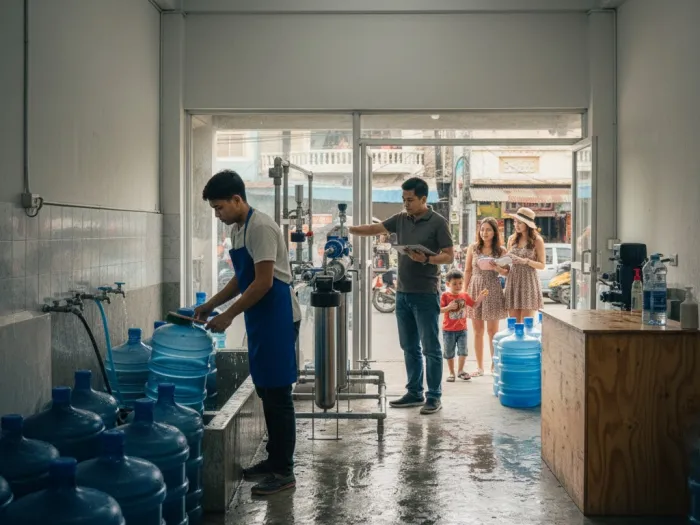
Your facility layout and your team play a huge role in the safety, speed, and overall quality of your water refilling station. Hindi puwedeng bara-bara ang setup dito. DOH is strict about sanitation, workflow, and how water moves inside your shop. The cleaner, smoother, and more organized your facility, the more confident your customers feel every time they buy from you.
Required Layout for DOH Compliance
A proper water refilling station typically has four functional zones:
1. Washing & Sanitizing Area
Where old containers are:
- Washed
- Brushed
- Rinsed
- Sanitized using hot water or chemical solution
This area must have:
- Proper drainage
- Anti-slip flooring
- Wastewater management
2. Purification Area
This is where your RO system, pumps, tanks, and UV sterilizers are stored.
Guidelines:
- Must be CLEAN, DRY, and ENCLOSED
- Allowed entry only for trained staff
- No pets, no food, no clutter
3. Refilling & Capping Area
Where purified water is dispensed and sealed into clean gallons.
This area must be:
- Isolated from washing area
- Bright and well-lit
- Frequently sanitized (ozone generator recommended)
4. Storage & Dispatch Area
For storing clean gallons and preparing deliveries.
Essentials:
- Organized shelves for empty and clean gallons
- Ventilated space for delivery motorcycles
- Easy access for riders
Who You Need to Hire
A small station usually operates with 2 to 3 staff members.
1. Refiller / Technician
Responsibilities:
- Operate RO system
- Clean filters
- Sanitize equipment
- Monitor water quality
- Make sure output meets DOH standards
Look for:
- Someone masipag, attentive, and trainable
- Basic understanding of plumbing or machines is a plus
2. Delivery Personnel
Responsibilities:
- Deliver gallons efficiently
- Handle customer payments
- Maintain delivery motorcycle
- Track orders & recurring customers
Qualities:
- Trustworthy
- Familiar with local streets
- Physically fit
3. Cashier / Front Desk (Optional but helpful)
For busier stations:
- Manages walk-ins
- Coordinates deliveries
- Handles inventory & payments
Training Requirements (Very Important)
Even if staff have no prior experience, you can train them in:
- Proper cleaning & sanitizing techniques
- Safe handling of purified water
- How to operate filters, pumps, and UV systems
- Daily startup and shutdown routines
- Customer service basics
- Recording sales and monitoring gallon inventory
A well-trained staff is your “quality control.”
A sloppy staff is your biggest liability.
Every customer can taste the difference.
Sample Daily Staff Schedule (Table)
| Time | Activity | Staff Responsible |
|---|---|---|
| 7:00 AM | Store cleaning & equipment check | Technician |
| 8:00 AM | Start purification & first batch of washing | Technician + Refiller |
| 9:00 AM – 12:00 PM | Walk-ins + deliveries | Delivery Staff |
| 12:00 PM – 1:00 PM | Lunch break (rotation) | All |
| 1:00 PM – 5:00 PM | Peak delivery hours | Delivery Staff |
| 5:00 PM – 6:00 PM | Last refilling batch + sanitation | Technician |
A well-structured day keeps operations smooth and prevents delays for your customers, especially during peak hours.
🚚 Step 7: Launch Your Water Station & Start Operations
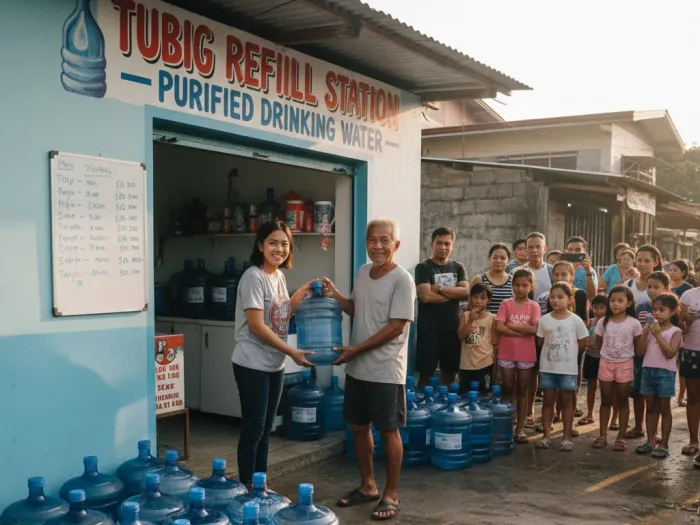
This is the part where everything comes together. After weeks of preparation, permits, equipment installation, and training, your water refilling station is finally ready to serve customers. The goal now is simple: start strong, operate clean, and build trust fast. Water is a sensitive product — once people trust your quality, they become loyal for years.
What Your Grand Opening Should Look Like
Launching doesn’t have to be fancy, but it must be strategic. Focus on visibility and making it easy for people to try your water for the first time.
Try these proven launch moves:
- Offer ₱5–₱10 off for the first week
- Give 1 free gallon for every 10 refills
- Distribute flyers around the barangay
- Post in local Facebook groups
- Offer free delivery within 1 km during launch
People are more likely to try your water if the first experience feels friendly and convenient.
Your Daily Operations: What It Looks Like in Real Life
A water refilling station runs on routine. Smooth daily operations mean fewer delays, happy customers, and predictable income.
Daily Tasks Include:
- Container washing and sanitizing
- Continuous purification through your RO system
- Refilling and sealing gallons
- Walk-in customer handling
- Delivery scheduling and dispatch
- Filter and pressure checks
- Cleaning the capping room
- Logging inventory and sales
Once your staff gets used to the flow, everything becomes natural and efficient.
Delivery: The Real Engine of Your Business
Most profitable stations get 60–80% of their income from delivery.
Key delivery tips:
- Start with 1 motorcycle (or even a bicycle in small barangays)
- Organize areas by route and time
- Track recurring customers (weekly, every 3 days, etc.)
- Offer subscription-style refilling (“3x/week delivery”)
- Always notify customers when riders are nearby
Delivery builds routine customers — the backbone of your monthly sales.
Marketing Moves That Actually Work
You don’t need fancy ads. Water is a “proximity + trust” business. Stick to what works in local communities:
- Put a big, clear signage outside
- Join barangay Facebook groups
- Offer discounts for bulk orders (offices, stores)
- Collaborate with sari-sari stores as pickup partners
- Encourage reviews and referrals
- Create a simple loyalty card for suki households
A water refilling station grows through community trust, not big marketing budgets.
Daily Operations Workflow (Table)
| Time | Activity | Purpose |
|---|---|---|
| Morning | Water production, washing, early deliveries | Supply build-up, serve early orders |
| Midday | Walk-ins, peak deliveries | Main revenue hours |
| Afternoon | Second production batch, sanitation | Refill tanks, maintain quality |
| Evening | Container sorting, closing tasks | Prep for next day |
Running a water station becomes easier once your team settles into a predictable rhythm. The key is consistency — same quality, same cleanliness, same reliability every single day.
💵 ROI: When Will You Break Even?
Understanding when your water refilling station will recover its capital is one of the most important parts of your planning. Fortunately, this business has one of the most stable ROI timelines in the Philippines because people buy water regularly. Your ROI will depend on location, delivery volume, water quality, and how consistent your operations are.
Typical ROI Range
Most stations recover their startup capital within:
- Fast ROI: 6–9 months
- Average ROI: 10–14 months
- Slow ROI: 15–18 months
Anything beyond 18 months usually means issues with competition, location, water pressure, or inconsistent operations.
Factors That Speed Up ROI
These signs indicate you’ll recover your investment faster:
- Located in a dense residential area
- High daily delivery demand
- Customers love the water taste
- Minimal competitors nearby
- Riders follow efficient delivery routes
- Offering alkaline or mineral options
- Strong launch promos
- Machines stay consistent with no downtime
Factors That Slow Down ROI
Watch out for the following:
- Weak water pressure
- Frequent equipment problems
- Unsanitary washing or capping area
- Poor staff handling
- Low visibility location
- Too many competitors in the same street
- Incomplete permits causing delays
These significantly slow earnings and customer trust.
ROI Projection (Table)
| Scenario | Daily Sales | Monthly Net Income | Estimated ROI | Notes |
|---|---|---|---|---|
| Fast ROI | 100–150 refills/day | ₱60,000–₱90,000 | 6–9 months | Strong location + reliable delivery |
| Average ROI | 60–80 refills/day | ₱30,000–₱50,000 | 10–14 months | Most common outcome for new stations |
| Slow ROI | 30–40 refills/day | ₱15,000–₱25,000 | 15–18 months | Competitive or low-visibility locations |
How to Hit the Fast ROI Bracket
1. Maximize Deliveries
Deliveries generate up to 70% of total revenue.
Faster routes and predictable delivery schedules boost sales.
2. Maintain Consistent Water Taste
People judge water quality instantly.
If your taste changes even slightly, your suki customers will notice.
3. Build Repeat Customers
Households and small offices that order 2–3 times per week stabilize your monthly income.
4. Prevent Machine Downtime
A breakdown can cost you a full day of sales.
Regular filter changes and system checks are crucial.
5. Use Simple, Local Marketing
- Visible signage
- Barangay Facebook posts
- Referral rewards
- Loyalty cards
Consistency beats expensive ads here. ROI in this business rewards consistency more than speed. You don’t need viral promotions or huge capital — just steady operations, good water, and reliable service. Once people trust your water, your income becomes one of the most predictable streams you’ll ever build.
⚠️ Common Mistakes When Starting a Water Refilling Station
Even with good equipment and capital, many water refilling stations struggle because of avoidable mistakes. These issues don’t just slow down your growth – they directly impact water quality, customer trust, and your ROI. The good news? If you know the red flags early, you can avoid all the usual pitfalls that sink new stations.
Choosing the Wrong Location
Many owners rush into cheap rental spaces without checking:
- Residential density
- Competitors within 300–500 meters
- Visibility from the main road
- Accessibility for delivery motorcycles
- Water pressure stability
A bad location is the number one reason stations take 2+ years to break even.
Ignoring Water Pressure Problems
Weak pressure slows purification dramatically.
If your system produces only half its capacity, deliveries get delayed and orders pile up.
Always test water pressure before signing a lease.
Buying the Cheapest Equipment
Cheap RO systems may:
- Break down frequently
- Produce inconsistent water taste
- Require more filter changes
- Fail DOH testing
This leads to complaints and customer loss. Quality equipment pays for itself.
Poor Sanitation in Washing & Capping Areas
A lot of new stations fail DOH checks because:
- The washing area is dirty
- Caps are handled with bare hands
- Gallons touch the floor
- Refilling room is not enclosed properly
Water refilling is a trust business. One sanitation mistake can ruin your brand.
No Delivery System
Some new owners rely only on walk-ins.
Reality check: 60–80% of sales come from delivery.
Without delivery, your market is limited and growth slows.
Not Training Staff Properly
Common staff mistakes:
- Incorrect filter changes
- Mishandling UV or ozone
- Poor cleaning of capping room
- Slow response to orders
- Mixing clean and dirty containers
A well-trained team is your quality control system.
Inconsistent Water Taste or Smell
Customers switch immediately if they notice:
- Chlorine smell
- Bitter aftertaste
- Cloudy output
- Sudden change in TDS
This usually means improper maintenance or skipped filter schedules.
Skipping Regular Water Tests
DOH requires:
- Monthly bacteriological test
- Semi-annual physical-chemical test
Failing tests can lead to closures or warnings.
Underestimating Competition
If 4–5 stations already exist on your street, you’re entering a slow ROI zone.
You need a stronger value proposition: faster delivery, better taste, cleaner setup, or alkaline options.
Common Mistakes + How to Avoid Them (Table)
| Mistake | Effect on Business | How to Avoid |
|---|---|---|
| Bad location | Slow sales, weak walk-ins | Study population density & competition |
| Cheap machines | Frequent breakdowns | Choose reputable suppliers only |
| Poor sanitation | Loss of customer trust | Daily cleaning + strict staff hygiene |
| No delivery | Limited sales | Prioritize delivery routes early |
| Inconsistent water taste | Customer complaints | Follow strict filter maintenance |
| Weak training | Inefficiency & errors | Provide full onboarding & checklists |
Avoiding these mistakes is half the battle. If you get these right from the start, your water refilling station is already ahead of most new operators.
🛡️ DOH Compliance & Water Quality Requirements
A water refilling station isn’t just a business – it’s a public health responsibility. Your customers trust you with something they drink every day, so your water must consistently meet DOH standards. This means regular testing, strict sanitation, and following a maintenance schedule that keeps your system clean and safe. When your water quality is solid, customers stay loyal for years.
Mandatory Water Tests (DOH-Accredited Only)
DOH requires every water refilling station to undergo the following tests:
1. Bacteriological Test (Monthly)
Checks for harmful bacteria such as E. coli and coliform.
This is the most important test — failing this means you must stop selling immediately until corrected.
2. Physical-Chemical Test (Twice a Year)
Measures clarity, pH level, taste, odor, and mineral content.
This ensures your water is stable and safe across all metrics.
3. Water Potability Certificate
Issued after tests are passed.
Customers may request this, and LGUs check it during inspections.
Sanitary Permit Requirements
Your station must renew its Sanitary Permit yearly.
Typically required:
- DTI Certificate
- Health certificates of all staff
- Potability tests
- Store layout
- Updated business permit
The sanitary inspector will evaluate your washing area, refilling room, drainage system, storage space, and waste disposal.
Cleaning & Disinfection Schedule
Consistency is everything. Most successful stations follow this cleaning pattern:
Daily
- Disinfect capping area
- Clean refilling table
- Wash and sanitize gallons
- Sweep & mop store areas
- Wipe down tanks and surfaces
Weekly
- Change sediment filters if water pressure is poor
- Deep-clean washing area
- Check UV lamp for clarity
Monthly
- Bacteriological test
- Tank cleaning
- Pressure check on all pumps
Quarterly
- Replace carbon filters
- Ozone generator servicing
- Deep sanitation of entire system
Semi-annual
- Full physical-chemical test
- Full system audit
Store Layout Requirements (DOH-Compliant)
Your facility must have clearly separated zones:
- Washing area: for scrubbing, rinsing, and sanitizing
- Refilling/capping room: enclosed, clean, and dust-free
- Purification area: controlled access for technicians
- Storage area: organized for empty and clean containers
DOH inspectors focus heavily on:
- Cleanliness
- Closed-off production areas
- Proper capping hygiene
- Non-mixing of clean and dirty gallons
Water Quality Compliance Table
| Requirement | Frequency | Purpose |
|---|---|---|
| Bacteriological Test | Monthly | Ensures no harmful bacteria |
| Physical-Chemical Test | Semi-annual | Checks pH, clarity, odor |
| Potability Certificate | As required | Proof of safe drinking water |
| Sanitary Permit | Annual | Health compliance |
| Staff Health Certificates | Annual | Ensures handlers are fit |
| Tank Cleaning | Monthly | Prevents algae & contamination |
Maintaining DOH compliance is not difficult — it just requires discipline and a clean routine. And when customers know your water always tastes clean and passes every test, they stay loyal for life.
❓ FAQs: Water Refilling Station (Philippines)
1. How much capital do I need to start a water refilling station?
Most small to mid-sized stations require ₱200,000 to ₱500,000 depending on equipment quality, space renovation, and permit costs. A basic RO setup is cheaper, while high-capacity systems for busy barangays cost more. Franchises also tend to be pricier but come with built-in support. Your final budget will depend heavily on location and the level of equipment you choose.
2. Do I need a franchise to start, or can I go independent?
You can start independently without a franchise. Many successful stations in the Philippines are independent setups because they allow full control over equipment, branding, and operating costs. A franchise is useful for beginners who want training and pre-built systems. Your choice depends on your budget and experience.
3. What permits are required to open a water refilling station?
You’ll need a DTI Certificate, BIR COR, Barangay Clearance, Mayor’s Permit, Sanitary Permit, Fire Safety Certificate, and DOH-related water tests like bacteriological and physical-chemical results. Water stations undergo more inspections because the business deals with public health. Maintaining these permits ensures your station operates legally and safely.
4. How often should water be tested for safety?
DOH requires monthly bacteriological testing and physical-chemical testing twice a year. These tests check taste, odor, clarity, pH, and bacteria levels. A potability certificate is issued once you pass these tests. Regular testing builds customer trust and ensures your water meets strict DOH standards.
5. How profitable is a water refilling station?
A typical station earns a net income of ₱30,000 to ₱50,000 per month once stable, with higher-performing stations reaching ₱60,000–₱90,000+. Profit depends on delivery volume, location, water quality, and daily operations. Stations with strong demand can recover capital within 6–12 months, making it one of the most stable small businesses in the Philippines.
6. How important is delivery service?
Extremely important. Around 60–80% of total earnings comes from deliveries, especially in residential areas. Customers prefer convenience and recurring deliveries create reliable weekly income. Without a delivery system, growth is significantly slower.
7. How do I know if my water quality is good?
Good water is clear, odorless, and consistent in taste. If your customers praise the taste or keep coming back weekly, that’s a strong sign your filtration system is working well. Regular testing and proper filter maintenance ensure that your water always meets DOH standards.
8. How often should filters be replaced?
Sediment filters may need weekly or bi-weekly replacement depending on water pressure and clarity. Carbon filters typically last 2–3 months, while RO membranes last 1–2 years. A strict maintenance schedule ensures better water taste, stable output, and fewer breakdowns.
9. Can I use my home as my business location?
Yes, many stations start in residential homes as long as the space complies with zoning and sanitation requirements. You’ll still need a Barangay Clearance, Sanitary Permit, and regular water testing. Just ensure you have enough space for tanks, washing, and refilling areas.
10. When can I expect to break even?
Most stations recover their capital in 10–14 months, with high-demand locations achieving ROI in 6–9 months. Slow but steady stations usually break even in 15–18 months. ROI depends on consistent water quality, fast delivery, and strong customer retention.
🌟 The Kind of Business That Grows With Your Community
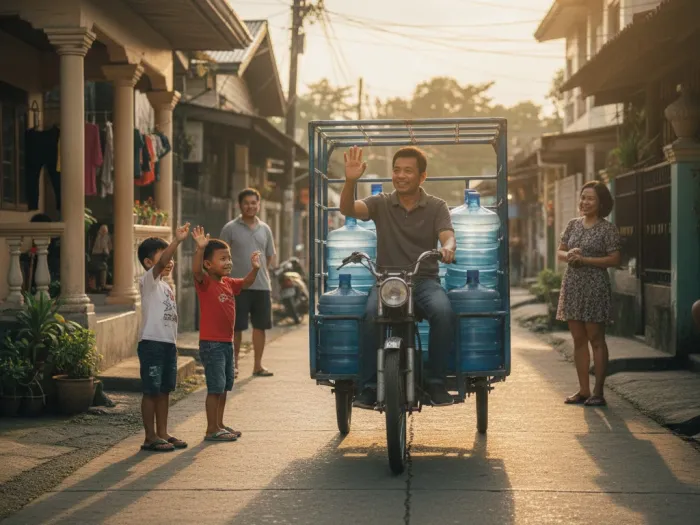
There’s something special about running a water refilling station. It’s not flashy, it’s not trendy, and it’s not the kind of business people brag about online. But every day, quietly and steadily, it serves a need that never stops. Families depend on you for something essential. And when customers keep coming back because they trust your water, that’s when you realize you’re building more than a business — you’re becoming part of your community’s daily life.
It won’t always be easy. There will be days when the pressure drops, filters clog, deliveries pile up, and you’re tired from the constant routine. But that’s also the beauty of it. You learn discipline, consistency, and the kind of responsibility that creates stable income month after month. And somewhere in the middle of all that, you’ll start to see the quiet magic of it — that you’ve built something reliable, something useful, something people depend on.
If you’ve read this far, maybe you’re already imagining your own station — the space, the machine humming, the suki customers calling you for delivery. Follow the steps, stay consistent, and protect your water quality. Do that every day, and the business will take care of you in ways you don’t expect. Steady, honest, and built for the long run. You’re closer than you think.