




Starting a business in the Philippines should feel exciting — but the moment you search for requirements, the overwhelm hits. DTI here, BIR there, LGU everywhere. Parang ang daming kailangan at hindi mo alam saan magsisimula. Totally normal. Every new entrepreneur goes through that early confusion.
- 🧭 Understanding How Business Registration Works (DTI–BIR–LGU Overview)
- 🏷️ Step 1: DTI Registration (Business Name & Identity)
- 🧾 Step 2: BIR Registration (COR, Tax Types & Receipts)
- 🏛️ Step 3: LGU Registration (Barangay & Mayor’s Permit)
- 📦 Complete Business Registration Checklist (DTI–BIR–LGU)
- 💸 Total Cost Breakdown & Realistic Budget (DTI–BIR–LGU)
- 📑 DTI vs BIR vs LGU: What Each Office Actually Checks
- ⚙️ How to Update, Transfer, or Renew Your Business
- 💼 When DTI Is Not Enough: Other Business Structures
- ❓ FAQs: Business Registration in the Philippines
- 🌟 When Your Business Becomes “Real,” Everything Changes
- References
But once you understand the simple flow — DTI for your business name, BIR for taxes, LGU for your permits — everything becomes clearer and much less intimidating. This guide breaks down the process into practical steps, real fees, and easy checklists so you can make your business fully legal without the usual stress.
Whether you’re starting an online shop, a small food stall, or a home-based service, this is the roadmap built for first-timers. Simple, straight-to-the-point, and made for everyday Pinoys who just want to get things done.

🧭 Understanding How Business Registration Works (DTI–BIR–LGU Overview)
Most first-time entrepreneurs get confused not because the process is difficult, but because no one explains what each office actually does. DTI handles one thing, BIR handles another, LGU handles something else — and until you understand their roles, the registration flow feels sabog. So let’s simplify it.
What Each Office Handles
- DTI – Approves and protects your business name for sole proprietorships.
- BIR – Registers your tax identity, issues your Certificate of Registration, and authorizes your receipts.
- LGU (Barangay + City Hall) – Gives you your local permits so you can legally operate in your area.
Why You Need All Three
Each office approves a different part of your business:
- DTI confirms your name.
- BIR confirms your tax identity.
- LGU confirms your location and operations.
When combined, you’re officially legit — allowed to operate, issue receipts, file taxes, and comply with national and local rules.
Quick Comparison Table
| Office | What They Approve | Main Purpose |
|---|---|---|
| DTI | Business name | Identity & branding |
| BIR | Certificate of Registration & receipts | Taxes & compliance |
| LGU | Barangay & Mayor’s Permits | Local operation & safety |
This simple breakdown is the “map” of your entire registration journey. Once you understand who checks what, the rest of the process becomes predictable and much easier to follow.

🏷️ Step 1: DTI Registration (Business Name & Identity)
DTI is your very first stop if you’re registering as a sole proprietor. This is where you legally secure your business name — the identity you’ll use on receipts, contracts, and anything official. Good news: DTI’s system is much easier now, with fast online registration and clear requirements. Once you complete this step, you officially own the name and can proceed to BIR.
Requirements
- Valid government ID
- Proposed business name (with 2–3 backup options)
- Business address
- Mobile number and email
- Payment for registration fee
How to Register Online (DTI BNRS)
The easiest and most recommended method:
- Visit the DTI Business Name Registration System (BNRS).
- Click New Business Registration.
- Fill in your personal details and proposed business names.
- Check name availability.
- Select business scope:
- Barangay – ₱200
- City/Municipality – ₱500
- Regional – ₱1,000
- National – ₱2,000
- Pay through GCash, Maya, credit or debit card.
- Download your DTI Certificate from your email or BNRS dashboard.
Processing time: Within minutes once payment is confirmed.
Walk-In Registration (Optional)
If online access is an issue:
- Go to the nearest DTI office.
- Fill out the Business Name Application Form.
- Present your valid ID and proposed names.
- Pay the required fee.
- Receive your printed certificate.
DTI Registration Fees (Table)
| Business Scope | Fee | Best For |
|---|---|---|
| Barangay | ₱200 | Home-based or hyper-local businesses |
| City/Municipality | ₱500 | Most small businesses |
| Regional | ₱1,000 | Multi-city operations |
| National | ₱2,000 | Brands targeting nationwide presence |
Validity
Your DTI Certificate is valid for 5 years. After expiry, you must renew it or risk losing your business name to someone else.
Tips to Avoid Name Rejection
- Avoid overly generic names (e.g., “Best Store”).
- Avoid names too similar to existing businesses.
- Don’t include terms like “Corporation” or “Inc.” (DTI is only for sole proprietorships).
- Prepare multiple name choices in case your first pick is taken.
DTI is the simplest part of your registration journey — once your name is secured, you’re ready for the more detailed step: BIR registration.
🧾 Step 2: BIR Registration (COR, Tax Types & Receipts)
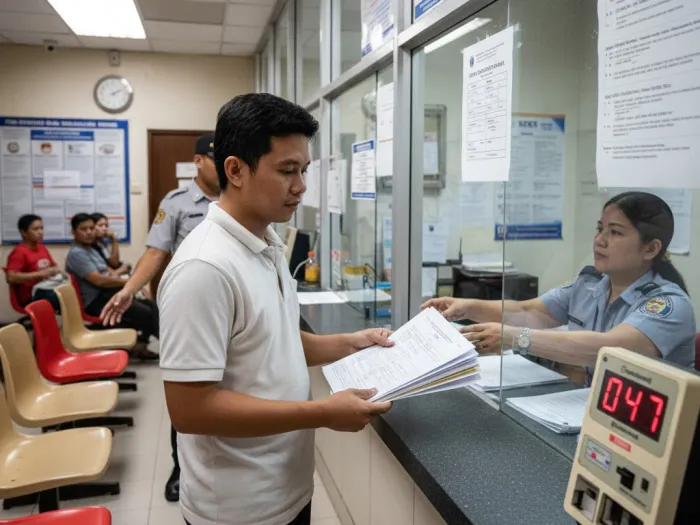
This is the step where your business becomes official in the eyes of the government. BIR registration gives you your Certificate of Registration (Form 2303), your tax type, and the authority to issue official receipts. Medyo intimidating at first, pero once you know the flow, mabilis lang siya — especially if your documents are complete.
What BIR Registration Gives You
- Certificate of Registration (BIR Form 2303)
- Your tax classification (Non-VAT or VAT)
- Authorization to issue Official Receipts or Sales Invoices
- Filing schedule for your taxes
- Compliance requirements for future reporting
Without this step, you cannot legally issue receipts or operate as a business.
Requirements
- DTI Certificate
- Valid government ID
- Proof of business address (lease contract or barangay certificate)
- BIR Form 1901 (application for self-employed/sole proprietor)
- TIN (if none, one will be assigned)
- Payment for DST and applicable fees
Step-by-Step BIR Process
- Go to the BIR RDO that covers your business address.
- Submit your filled-out BIR Form 1901.
- Present your DTI Certificate, ID, and proof of address.
- Pay:
- Documentary Stamp Tax (₱30)
- Annual Registration Fee (₱500, depending on RDO)
- Other minor charges if needed
- Attend the taxpayer briefing or seminar (varies per RDO).
- Receive your Certificate of Registration (2303).
- Apply for your Official Receipts (printed or electronic).
Understanding Tax Types
Non-VAT (Percentage Tax)
- For businesses earning below ₱3 million a year.
- Simpler filing.
- Common for small businesses and freelancers.
VAT Registered
- Required if you earn ₱3 million and above.
- More paperwork, but allows input tax credits.
- Usually chosen by larger businesses or those serving VAT-registered clients.
Official Receipts: Printed or Electronic
Printed Receipts (most common):
- Must come from a BIR-accredited printer.
- Requires stamping/approval.
- Costs around ₱500–₱2,500, depending on quantity.
Electronic Receipts (eOR/eSI):
- Required for certain business types or RDOs.
- Ask your RDO if this applies to you.
BIR Fees Breakdown
| Fee Type | Typical Cost |
|---|---|
| Documentary Stamp Tax | ₱30 |
| Annual Registration Fee | ₱500 (may be waived for some) |
| OR Printing | ₱500–₱2,500 |
| Registration Plate/Sticker | ₱50–₱150 |
Pro Tips to Avoid Penalties
- File taxes even with “no sales”.
- Keep copies of all receipts and invoices.
- Never delay BIR notices — mahal ang penalties.
- Consider hiring a bookkeeper if accounting stresses you out.
Once you finish this step, your business becomes fully recognized by BIR — meaning you’re almost ready to operate. Next stop: LGU permits.

🏛️ Step 3: LGU Registration (Barangay & Mayor’s Permit)
This is the part where your local government officially allows your business to operate in your area. LGU registration covers your Barangay Clearance, Mayor’s Permit, and any extra permits depending on your business type. Medyo matrabaho compared to DTI and BIR, pero once you understand the flow, mabilis lang and very predictable.



Barangay Business Clearance
This is always the first LGU document you secure.
Requirements:
- DTI Certificate
- Valid government ID
- Proof of address (lease contract or barangay certificate)
- Filled-out barangay application form
- BIR COR (some barangays ask for it)
Typical Fee: ₱300–₱1,000
Processing Time: Same day or next day
Barangay clearance confirms that you’re operating within their jurisdiction and that your business activity is allowed in your location.
Mayor’s Permit (Business Permit)
Once you have your barangay clearance, go to your City Hall or Municipal Hall to apply for your Mayor’s Permit.
Requirements:
- Barangay Business Clearance
- DTI Certificate
- BIR Certificate of Registration (2303)
- Lease Contract or Proof of Ownership
- Fire Safety documents (BFP)
- Sanitary Permit (if required)
- Occupancy Permit (for commercial spaces)
- Valid government ID
- Additional requirements depending on your business type
Fees you may encounter:
- Mayor’s Permit fee
- Business tax (based on declared capital)
- Garbage fee
- Sanitary/Health fee
- Zoning fee
- Fire Safety Inspection fee
- Miscellaneous local charges
Additional Permits You Might Need
Some businesses require extra documents depending on operations:
Common Additional Permits:
- Sanitary Permit – for food, wellness, salons, health-related shops
- Fire Safety Inspection Certificate – almost all physical stores need this
- Environmental Permit (ECC) – for manufacturing, heavy operations
- Signage Permit – if you’re installing a business sign
- Zoning Clearance – confirms your business type is allowed in the location
These are usually processed along with your Mayor’s Permit.
LGU Fees Table
| Permit Type | Typical Cost Range |
|---|---|
| Barangay Clearance | ₱300–₱1,000 |
| Mayor’s Permit Fee | ₱500–₱2,000 |
| Sanitary Permit | ₱300–₱1,500 |
| Fire Safety Fee | ₱300–₱1,500 |
| Garbage Fee | ₱300–₱1,000 |
| Zoning/Occupancy | ₱500–₱2,000 |
| Misc. LGU Charges | ₱200–₱1,000 |
Processing Time
- Barangay Clearance: Same day
- Mayor’s Permit: 1–3 days, depending on inspections
Some LGUs offer “One-Stop Shops” at the start of the year para mas mabilis ang renewal and new applications.
Why LGU Permits Matter
Your LGU permits validate:
- That your business location is legally allowed
- That your space is safe (fire + sanitary)
- That you are compliant with local rules
- That you can freely operate without penalties
Without LGU approval, a business can be fined, suspended, or even shut down — even if you’re already registered with DTI and BIR.
📦 Complete Business Registration Checklist (DTI–BIR–LGU)
Here’s the part that makes everything finally click — a single, organized checklist covering every document, step, and requirement you need from DTI, BIR, and LGU. If you follow this list in order, you won’t miss anything, and you won’t have to go back-and-forth between offices dahil may nakalimutan. This is your quick, at-a-glance roadmap.
DTI Checklist (Business Name Registration)
You need:
- Valid ID
- Proposed business name (with backups)
- Business address
- Email & mobile number
- Payment for registration fee
Steps:
- Check name availability
- Submit online or walk-in application
- Pay fee
- Download/claim DTI Certificate
Validity: 5 years
BIR Checklist (Tax Registration)
You need:
- DTI Certificate
- Valid ID
- Proof of business address
- BIR Form 1901
- TIN (or apply for one)
- Payment for DST & ARF (if required)
Steps:
- Register at correct RDO
- Submit Form 1901 + documents
- Pay fees
- Attend briefing (if required)
- Claim Certificate of Registration (2303)
- Apply for OR/SI (receipts)
LGU Checklist (Barangay & Mayor’s Permit)
You need:
- Barangay Clearance
- DTI Certificate
- BIR COR (2303)
- Lease contract / proof of ownership
- Valid ID
- Depending on business: Fire Safety, Sanitary, Occupancy, Zoning
Steps:
- Get Barangay Clearance
- Submit documents at City/Municipal Hall
- Pay fees (business tax, garbage, fire, zoning, sanitary, etc.)
- Undergo inspections if required
- Claim Mayor’s Permit
One-Page Summary Table
| Stage | What You Need | What You Get |
|---|---|---|
| DTI | ID, business name, address | DTI Business Name Certificate |
| BIR | DTI Cert, ID, proof of address, Form 1901 | BIR COR (2303), tax type, receipts |
| LGU | Barangay clearance, BIR docs, lease contract | Barangay Clearance, Mayor’s Permit |
This checklist gives you the full flow from start to finish. Screenshot it, save it, or use it as your working guide — it keeps everything organized and helps avoid delays during processing.

💸 Total Cost Breakdown & Realistic Budget (DTI–BIR–LGU)
Before launching your business, it helps to know exactly how much to prepare. Maraming Pinoys nagugulat na the registration fees aren’t just from one office — they come from three agencies, each with their own charges. The good news? Most of these fees are one-time expenses when you’re starting out, and many small businesses fall into the lower end of the cost range.
Here’s a clear breakdown of what you’ll typically spend.
DTI Registration Costs
DTI fees depend on your chosen scope:
| Business Scope | Fee | Notes |
|---|---|---|
| Barangay | ₱200 | For hyper-local or home-based businesses |
| City / Municipality | ₱500 | Most small businesses choose this |
| Regional | ₱1,000 | For operations across multiple provinces |
| National | ₱2,000 | For nationwide brands |
Additional cost: Documentary Stamp Tax – ₱30
BIR Registration Costs
These are standard charges across most RDOs:
| BIR Requirement | Typical Fee | Notes |
|---|---|---|
| Documentary Stamp Tax | ₱30 | Required for COR issuance |
| Annual Registration Fee | ₱500 (may vary) | Some RDOs waive this for small businesses |
| Official Receipt Printing | ₱500–₱2,500 | Depends on the printer and number of booklets |
| Registration Plate/Sticker | ₱50–₱150 | Optional, varies per RDO |
LGU Registration Costs
LGU fees depend on your city or municipality, plus your business type.
Barangay Clearance
₱300–₱1,000
Mayor’s Permit & Related Fees
| Permit Type | Cost Range |
|---|---|
| Mayor’s Permit Fee | ₱500–₱2,000 |
| Business Tax (based on capital) | Varies widely |
| Sanitary/Health Permit | ₱300–₱1,500 |
| Fire Safety Inspection | ₱300–₱1,500 |
| Garbage Fee | ₱300–₱1,000 |
| Zoning/Occupancy | ₱500–₱2,000 |
| Miscellaneous LGU Fees | ₱200–₱1,000 |
Total Estimated Registration Cost
Here’s a realistic estimate for most small startups:
| Level | Estimated Total | Best Fits |
|---|---|---|
| Low Budget | ₱3,500–₱5,000 | Online shops, freelancers, home-based services |
| Mid Range | ₱6,000–₱10,000 | Small stores, food stalls, salons |
| High Range | ₱10,000–₱15,000+ | Physical shops with inspections & extra permits |
Where Costs Can Increase
- Renting a commercial space (more LGU fees + inspections)
- Getting multiple OR booklets
- Food/wellness businesses (stricter sanitary requirements)
- Businesses that need zoning or environmental permits
These aren’t hidden charges — they’re simply adjustments based on your location and business type.
Preparing for these fees upfront removes the stress and lets you focus on launching smoothly.
📑 DTI vs BIR vs LGU: What Each Office Actually Checks
A lot of first-time entrepreneurs feel overwhelmed because they don’t understand why they need to go through three different offices. Hindi ito trip ng gobyerno — each agency checks a completely different part of your business. Once you understand their roles, the whole process suddenly feels more logical and less frustrating.
What DTI Checks
DTI’s job is straightforward: they verify your business name and your identity as the owner.
They check:
- If your proposed business name is unique
- If the name is allowed (not misleading, illegal, or confusing)
- Your valid ID
- The scope of your business (barangay, city, regional, national)
They do NOT check:
- Your financials
- Your taxes
- Your location or operations
DTI is purely about name ownership and branding.
What BIR Checks
BIR focuses on your tax responsibilities. Once you register here, you’re officially part of the tax system.
They check:
- DTI Certificate
- Your business address (to assign your RDO)
- Your tax classification (Non-VAT or VAT)
- Your OR/SI printing or e-receipt setup
- Your identity and TIN
Their priority:
To issue your Certificate of Registration (2303) and ensure you can legally issue receipts, file returns, and pay taxes.
What LGU Checks
LGUs care about where you operate and whether your business is safe and compliant for the community.
They check:
- Your DTI and BIR documents
- Your business location (zoning)
- Fire safety standards (BFP)
- Sanitation requirements (for food, wellness, etc.)
- Occupancy or building permits
- Environmental impact (if applicable)
Their priority:
To ensure your business won’t cause risks or problems in your area.
Comparison Table
| Office | What They Check | Why It Matters |
|---|---|---|
| DTI | Business name & owner identity | Legal ownership of your brand |
| BIR | Tax type, receipts, COR | Legal authority to operate & issue receipts |
| LGU | Location, safety, sanitation | Community safety & local compliance |
Once you understand these roles, you’ll know exactly why the order is always DTI → BIR → LGU. It’s the cleanest, most logical flow.
⚙️ How to Update, Transfer, or Renew Your Business
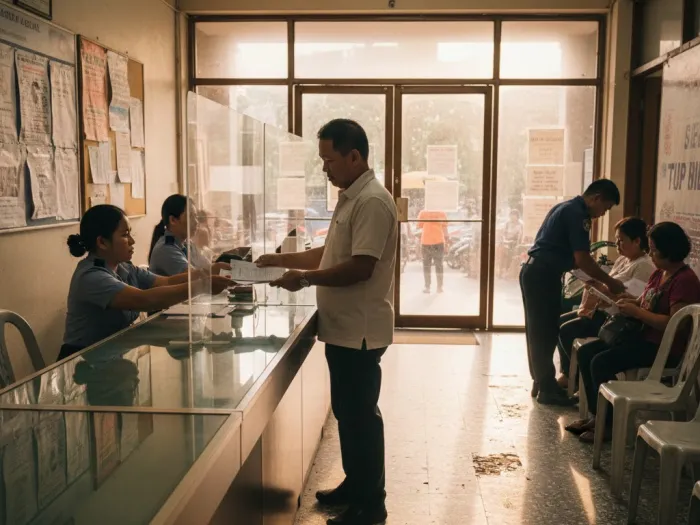
Even after you finish your DTI, BIR, and LGU registration, your business details may change over time. Lilipat ka ng location, babaguhin mo ang business name, or maybe you’ll expand your operations. These changes must be updated with the proper agencies to avoid penalties, notices, or delays when transacting with banks, suppliers, and government offices. Here’s a clear, no-confusion guide on how to keep your business records accurate and up to date.
Updating Your DTI Registration
DTI updates are done through the BNRS portal.
Common updates:
- Change of business name
- New business address
- Owner information changes
- Scope upgrade (e.g., city to regional)
- Renewal of business name (every 5 years)
How to update:
- Log in to the DTI BNRS website using your reference number and email.
- Choose the update or renewal option.
- Upload any required documents.
- Pay the applicable fee.
- Download your updated certificate.
Important reminder:
If you forget to renew and your name expires, someone else can legally claim it.
Updating Your BIR Registration
To update your BIR information, you will use BIR Form 1905.
Common updates:
- New business address (requires RDO transfer)
- Change of trade/business name
- Adding or removing business activities
- Changing tax type (Non-VAT to VAT, or vice versa)
- Cancellation or closure of business
How to update:
- Fill out BIR Form 1905.
- Submit it to your current RDO or new RDO (if transferring).
- Present supporting documents (DTI cert, lease contract, IDs, etc.).
- Update your receipts and COR if necessary.
Note:
Address changes require RDO approval. Always update your address — BIR notices sent to your old address still count.
Updating LGU Permits
LGU changes depend on your city or municipality.
Common updates:
- Business address transfer
- Change in business activity
- Increase in declared capital
- New signage or renovations
- Annual renewal of Mayor’s Permit
How to update:
- Secure a new Barangay Clearance for the updated info.
- Go to City/Municipal Hall to process changes in your Mayor’s Permit.
- Present updated DTI and BIR documents.
- Pay updated local fees.
- Undergo inspections if required (fire, sanitary, zoning).
LGU Renewal Deadline:
Every year — on or before January 20.
Late renewals come with hefty penalties and surcharges.
What Happens If You Don’t Update
- Penalties from BIR or LGU
- Possible business suspension
- Receipts becoming invalid
- Problems opening business bank accounts
- Delays with supplier registrations
- Notices for non-compliance
Keeping your records updated keeps your business credible, protected, and hassle-free.
💼 When DTI Is Not Enough: Other Business Structures
While DTI is perfect for sole proprietors, not all businesses should operate under a sole prop structure. Some need more protection, more partners, or a more formal setup. If your business is growing fast or involves multiple owners, DTI alone may not be enough. In these cases, you might need SEC registration instead — which covers corporations and partnerships.
When You Should Consider SEC Instead of DTI
Here are situations where SEC is the better or required option:
- You have business partners and want shared ownership
- You want limited liability protection
- You plan to raise capital or accept investors
- You want to build a brand that feels more corporate or scalable
- Your industry requires a corporate structure (finance, lending, certain regulated sectors)
If any of these apply to your business, SEC registration might be the right move.
Business Structures Under SEC
Here are the most common types:
One-Person Corporation (OPC)
- Ideal for solo entrepreneurs wanting limited liability
- Only one stockholder
- Requires minimum structure (no need for a full board)
- Perfect for freelancers, agencies, consultants, growing online brands
Corporation
- Ideal for businesses with multiple owners
- Offers full limited liability
- Often required for larger enterprises
- Better access to capital, loans, and major clients
Partnership
- Two or more owners
- Each partner shares profits and responsibilities
- Simpler than a corporation but offers less liability protection
DTI vs SEC at a Glance
| Feature | DTI (Sole Prop) | SEC (OPC/Corp) |
|---|---|---|
| Ownership | Single owner | One or multiple owners |
| Liability | Unlimited (owner is personally liable) | Limited (asset protection) |
| Startup Cost | Lower | Higher |
| Best For | Small to medium businesses | Growing & scalable businesses |
| Tax Handling | Simplified | Corporate tax structure |
| Branding | Personal | More formal/business-oriented |
Which One Should You Choose?
- If you’re a small, simple business, stick with DTI.
- If you’re serious about scaling, or you want clearer separation between personal and business assets, consider SEC.
- If you plan to raise money, accept investors, or land bigger contracts — SEC is almost always required.
Understanding your structure helps you make smarter decisions and build long-term stability for your business.
❓ FAQs: Business Registration in the Philippines
1. Do I need all three registrations (DTI, BIR, LGU) to start a business?
Yes, if you want to operate legally. DTI secures your business name, BIR gives you your tax identity and receipts, and the LGU issues your permits to operate in your area. These three agencies cover different parts of your legitimacy, so skipping any one of them puts you at risk of penalties. Completing all three ensures your business is recognized at the national and local levels.
2. Can I start selling first before getting permits?
Technically no — all businesses are required to register before operations begin. However, many small entrepreneurs start informally, especially online. Just remember that the longer you delay registration, the higher the risk of penalties, especially with BIR. It’s always better to register early, especially if you’re planning long-term growth.
3. How long does it take to complete DTI, BIR, and LGU registration?
DTI can be done within minutes if done online. BIR processing usually takes 1 to 2 days depending on your RDO’s workload. LGU permits vary widely — some release in a day, others take several days due to inspections. In many cities, you can finish everything within one week if your documents are complete.
4. How much money should I prepare for full business registration?
Most small businesses spend around ₱3,500 to ₱10,000 for DTI, BIR, and LGU permits combined. Costs increase if your business requires more inspections, like food or wellness services. Always factor in additional fees like printing receipts and fire inspection charges. Preparing extra funds helps avoid delays.
5. Do online businesses still need permits?
Yes. The moment you engage in selling products or services, you are considered a business in the eyes of DTI, BIR, and LGU. Even if your operations are purely online or home-based, you still need to register. You can use your home address as your business address for most of the permits.
6. Can I use my home address for business registration?
Yes, especially for freelancers, online sellers, consultants, and home-based businesses. You only need a Barangay Certificate or lease contract as proof of address. However, make sure your LGU allows your business type in a residential area. Some locations have zoning restrictions for food and manufacturing.
7. What if my business name is taken during DTI registration?
You’ll need to choose another name. That’s why it’s smart to prepare 2 to 3 backup names before registering. DTI will immediately notify you if your chosen name is already in use or too similar to an existing one. Choosing unique, descriptive names increases your chances of approval.
8. How do I know if I should register as VAT or Non-VAT?
If you expect to earn below ₱3 million annually, Non-VAT (Percentage Tax) is simpler and more cost-effective. If you’re earning above that or if your clients require VAT invoices, then VAT registration is better. You can also upgrade later if your business grows. Understanding your expected income helps you choose the correct tax type.
9. What happens if I don’t renew my Mayor’s Permit or DTI registration?
You will incur penalties, surcharges, and possibly legal issues. DTI needs renewal every 5 years, while LGU permits require renewal every January. If you ignore renewals for too long, you risk suspension of operations. Keeping your documents updated ensures continuous, penalty-free business operations.
10. Do I need a bookkeeper or accountant for a small business?
It depends on your comfort level with taxes. Many small business owners choose to hire a bookkeeper to avoid mistakes with BIR filings. While not mandatory, having one saves time and avoids costly penalties. If you’re handling multiple transactions monthly, professional help is usually worth it.

🌟 When Your Business Becomes “Real,” Everything Changes
There’s something powerful about finally holding your DTI Certificate, your BIR COR, and your Mayor’s Permit. Parang biglang lumalalim yung “I’m really doing this” moment. You stop feeling like you’re just trying things out — and start feeling like an actual business owner. And that shift matters. It brings confidence, doors start opening, and people take you more seriously because your business is now fully legit.
The journey isn’t always smooth. May pila, may konting kalituhan, may gastos talaga. But the payoff is stability and freedom — the kind that comes only when you build something with your own hands, your own diskarte, and your own grit. Once everything is registered, you can focus on selling, growing, and improving your craft without fear of surprise inspections or penalties. Totoo ‘yan, ang gaan sa pakiramdam.
Keep going. You started this because you believed in an idea… and look where that got you. You’re now a registered business owner in the Philippines — and that’s no small thing. Move forward with confidence. The foundation is set, and the next wins are just waiting.